Introduction
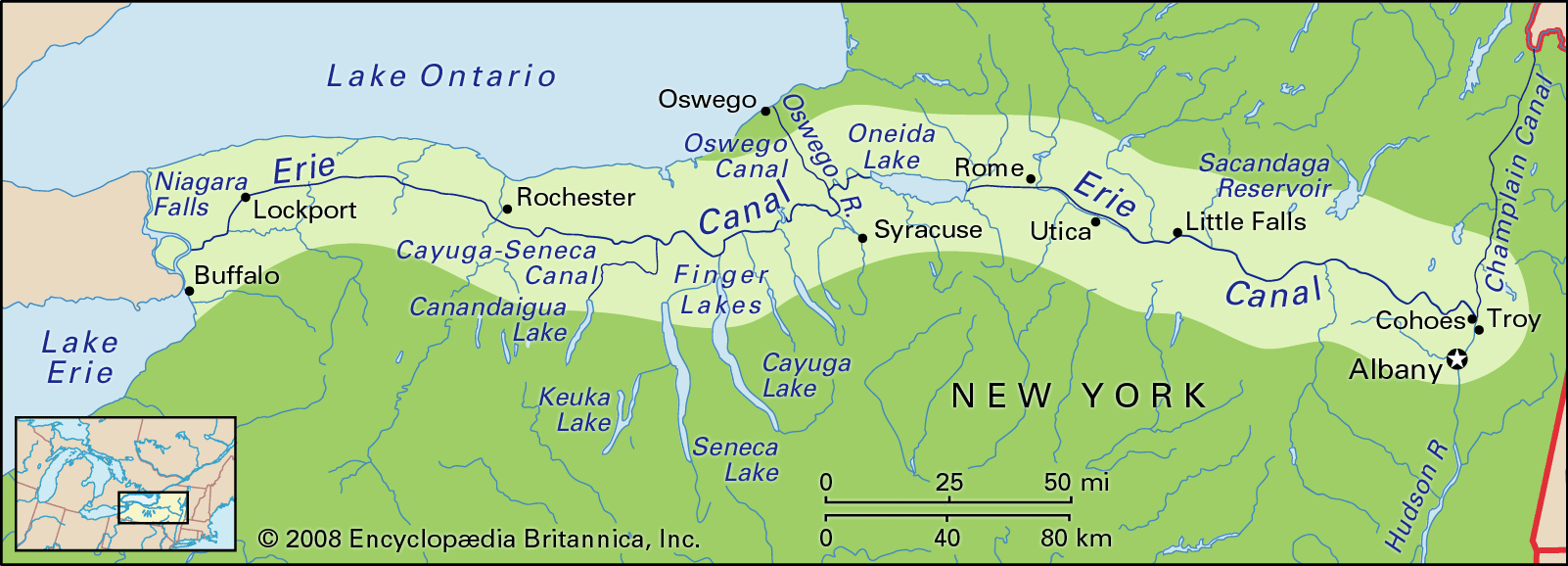
The Erie Canal, a monumental engineering feat completed in 1825, has played a crucial role in shaping the economic landscape of New York State and the United States at large. Spanning 363 miles, this waterway provided a vital transportation route that connected the Atlantic Ocean to the Great Lakes, significantly reducing shipping times and costs. Understanding the Erie Canal’s historical significance offers insights into America’s development and expansion during the 19th century.
The Construction of the Erie Canal
The Erie Canal was envisioned by Governor Dewitt Clinton, who recognized the potential for trade expansion as the nation grew. Construction began in 1817, employing tens of thousands of workers and utilizing innovative techniques for the time, such as lock systems to manage elevation changes. By its completion in 1825, the Canal had 83 locks, allowing vessels to traverse the varied terrain of New York.
Economic Impact
The economic implications of the Erie Canal were profound. Before its establishment, transporting goods from the Midwest to the East Coast was both time-consuming and expensive. The Erie Canal reduced transportation costs by over 90%, facilitating the movement of agricultural products, raw materials, and manufactured goods. This set the stage for New York City to emerge as a major commercial hub, as it became easier to move products inland.
Cultural and Social Changes
The Canal’s influence extended beyond economics; it also facilitated migration and cultural exchange. Settlers flocked to New York and the Midwest, leading to population growth and the emergence of new communities along the waterway. The Canal became a symbol of American ingenuity and ambition, promoting the spirit of the westward expansion that characterized the era.
Modern Relevance
Today, the Erie Canal is recognized not only for its historical significance but also for its role in contemporary transportation and tourism. It continues to serve as a route for recreational boating, attracting tourists and residents alike. Communities along the Canal have capitalized on its historical value, preserving many of its locks and structures as part of New York’s heritage.
Conclusion
The Erie Canal is more than just a waterway; it is a historical landmark that symbolizes the transformation of the United States during the 19th century. As a catalyst for economic development, cultural exchanges, and westward expansion, its significance reverberates through American history. As we look to the future, the Erie Canal remains a vital part of our nation’s infrastructure, continuing to inspire generations with its legacy.