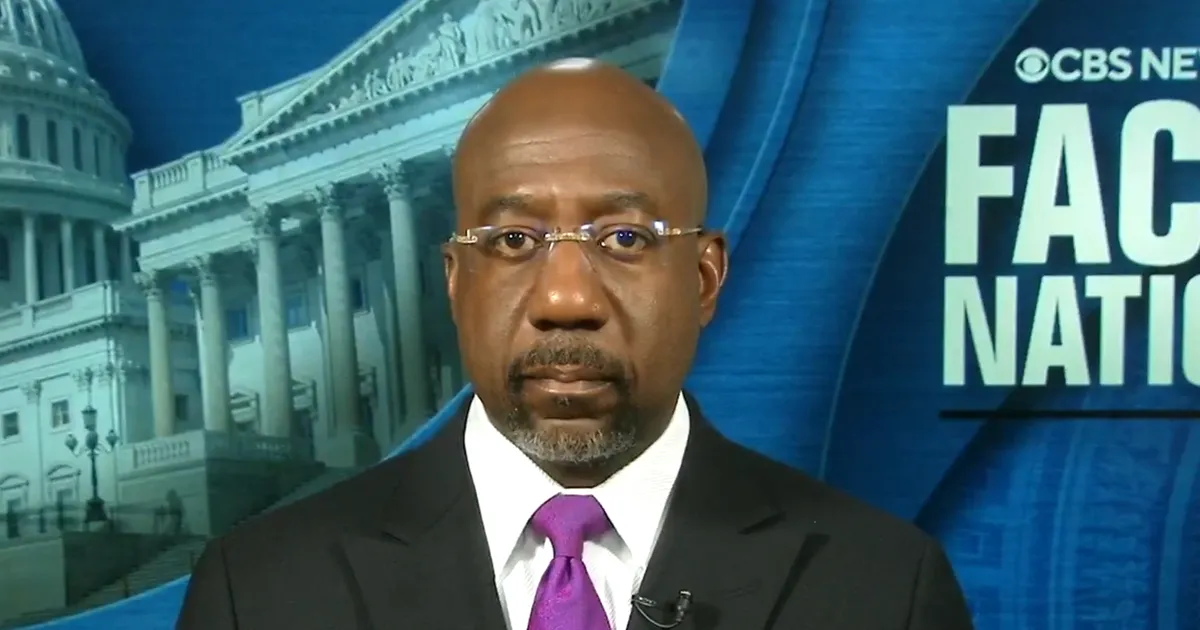
Senator Raphael Warnock has voiced strong concerns regarding the Supreme Court’s recent decision, which he argues could significantly harm minority voting rights and escalate partisan redistricting battles across the country. This ruling, which narrows the application of Section 2 of the Voting Rights Act, raises alarm among advocates for fair elections.
The Supreme Court’s decision follows a history of weakened federal oversight of voting laws, including the pivotal 2013 Shelby County v. Holder ruling. Documents show that this latest ruling makes it more challenging to contest electoral maps based on racial discrimination unless clear intent can be demonstrated.
In response to the ruling, Warnock described it as a “massive and devastating blow” to democracy and particularly detrimental to people of color in the South. He stated, “The court, sadly, poured fuel on this redistricting arms race,” which suggests an impending increase in efforts to redraw district lines in ways that could dilute minority voting power.
Furthermore, Republican governors in several states have already indicated their interest in revising congressional maps in light of this decision. The implications are significant; as Warnock pointed out, such actions may embolden states to engage in gerrymandering practices that circumvent fair representation.
To combat these developments, Warnock has introduced legislation aimed at banning partisan gerrymandering to ensure equitable elections. He emphasized that gerrymandering turns elections upside down: “rather than the people picking their politicians, the politicians are picking their voters.” This statement underscores his commitment to protecting voting rights for minority voters.
As observers analyze the potential fallout from this ruling, many anticipate an intensification of legal battles surrounding redistricting across various states. The next steps will likely involve legislative efforts aimed at safeguarding electoral integrity and ensuring that minority voices remain represented in political processes.