Introduction to the 25th Amendment
The 25th Amendment to the United States Constitution is a significant provision regarding presidential succession and disability. Ratified in 1967, the amendment was primarily instituted to provide clarity to the processes involved in the event that a president is unable to fulfill their duties. Its importance has been underscored during times of political uncertainty and health crises.
Overview of the Amendment’s Sections
The 25th Amendment is composed of four sections, each addressing different scenarios regarding presidential succession.
- Section 1: Clarifies that the vice president will become president in the event of the president’s removal, resignation, or death.
- Section 2: Establishes the procedure for filling a vacancy in the office of the vice president.
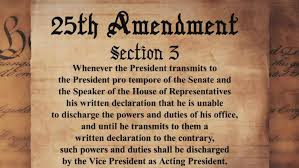
- Section 3: Provides a mechanism for the president to voluntarily transfer power to the vice president when they are unable to discharge the powers and duties of the office due to illness or other reasons.
- Section 4: Allows the vice president and a majority of the cabinet to declare the president unfit to perform their duties, triggering a process that can result in the transfer of power.
Recent Context and Usage
In recent years, the 25th Amendment has been referenced in discussions surrounding presidential health, particularly concerning former President Donald Trump’s health during his tenure. Questions regarding the invocation of Section 4 were raised but not enacted, showing the complexities involved in the amendment’s application.
Moreover, in 2021, the political landscape again sparked debate on the potential necessity of the 25th Amendment, particularly around the transition of power and what constitutes disability or incapacity.
Conclusion: The Significance of the 25th Amendment
The 25th Amendment plays a critical role in maintaining the stability of the presidential office and the functions of government. Its provisions ensure a clear line of succession and a mechanism for dealing with presidential incapacity, essential for the continuity of the executive branch. As political conditions evolve and new challenges arise, understanding the 25th Amendment becomes increasingly relevant for citizens and policymakers alike. It not only illustrates the foresight of constitutional framers but also encourages ongoing discourse about the balance of power within U.S. governance.