“Tonight, truth prevailed over lies. Today, we won because Hungarians didn’t ask what their homeland could do for them — they asked what they could do for their homeland,” declared Péter Magyar, the newly elected leader of Hungary, as he celebrated a decisive victory over Viktor Orbán’s long-standing regime. Magyar’s words resonate deeply in a nation that has witnessed a significant political transformation after 16 years of Orbán’s rule.
On April 12, 2026, in Budapest, Hungary, the election results revealed a stark reality: Orbán’s Fidesz party garnered only 37% of the votes, while the opposition party, Tisza, claimed a commanding 53%. This marked a historic moment in Hungary’s post-Communist history, with nearly 80% voter turnout, a record that underscores the public’s desire for change.
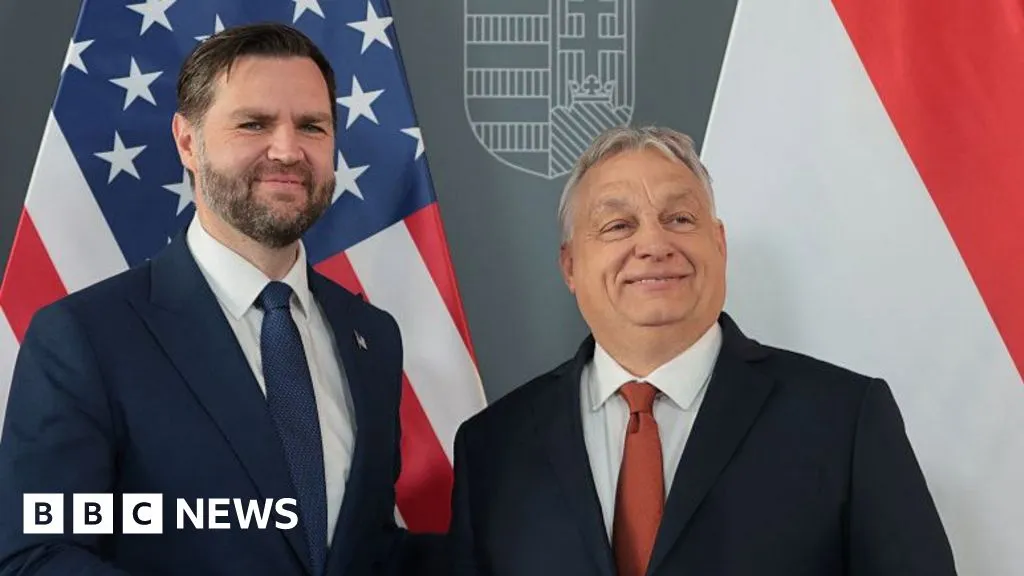
JD Vance, a prominent U.S. politician, had made a last-minute appeal to the Hungarian electorate, urging them to support Orbán just days before the election. “We have got to get Viktor Orbán reelected as prime minister of Hungary, don’t we?” Vance’s words, however, fell on deaf ears as the electorate chose to embrace a new direction.
Orbán’s tenure has been marked by accusations of undermining democracy and media freedom, which have strained Hungary’s relationship with the European Union. His government has faced criticism for its refusal to assist Ukraine amid the ongoing Russian invasion, further isolating Hungary within the EU framework. The election results are expected to transform the political dynamics not only within Hungary but also across Europe.
In a striking contrast to Vance’s rallying cry, Orbán’s defeat signals a potential shift in Hungary’s governance. As he conceded, Orbán stated, “We are going to serve the Hungarian nation and our homeland from opposition.” This statement reflects a commitment to remain engaged in Hungarian politics, albeit from a different vantage point.
The election also saw Péter Magyar, a former loyalist to Orbán, rise to prominence, winning 94 out of 106 voting districts. His victory is emblematic of a broader rejection of Orbán’s policies, which have often been characterized by authoritarianism and populism. The electorate’s choice indicates a desire for a more democratic and transparent governance model.
As Hungary enters this new chapter, the implications of Orbán’s defeat extend beyond national borders. His close ties with global figures like Donald Trump and Vladimir Putin have raised concerns within the EU, where Orbán’s Fidesz party has frequently wielded its veto power. The new government under Magyar may seek to mend fences with the EU and adopt a more cooperative stance.
While the immediate future remains uncertain, the political landscape in Hungary has undeniably shifted. The ramifications of this election will be closely monitored, both domestically and internationally, as Hungary navigates its path forward in a rapidly changing geopolitical environment.