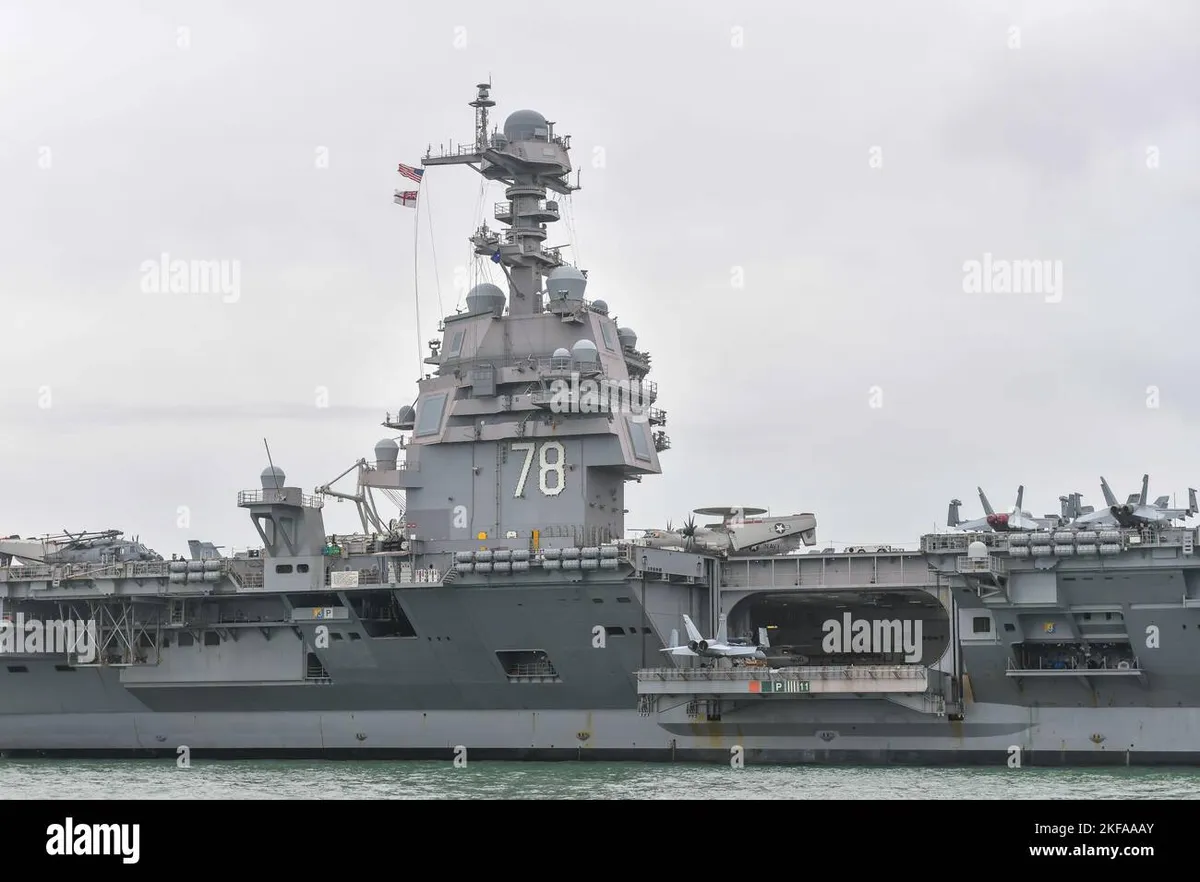
In a significant development, the USS Gerald R. Ford, the largest and most powerful aircraft carrier in the United States Navy, experienced a fire incident in its laundry department in mid-March 2026 while deployed in the eastern Mediterranean Sea. The fire, which took approximately 30 hours to extinguish, resulted in approximately 600 sailors losing access to their bunks due to damage caused by the flames.
Despite the severity of the situation, it is noteworthy that no sailors were seriously injured in the incident. The crew’s swift response and teamwork were crucial in preventing the fire from reigniting, showcasing their training and preparedness in handling emergencies aboard the vessel. The USS Gerald R. Ford, with a crew of about 4,500 sailors and equipped with dozens of tactical aircraft, has been on a prolonged deployment, which has now been extended twice by military command.
The USS Gerald R. Ford, which boasts a staggering cost of $13 billion, is not only the newest of the 11 US nuclear-powered aircraft carriers but also features an advanced electronic catapult system that allows for the launch of various aircraft. This capability is unique among US aircraft carriers and enhances the operational flexibility of the vessel. The ship has been involved in military operations in Iran and Venezuela under the administration of President Donald Trump, despite his previous criticisms of US military interventions.
As the USS Gerald R. Ford continues its deployment, it is on track to break the record for the longest deployment of an aircraft carrier since the Vietnam War. This extended presence underscores the strategic importance of the vessel in maintaining an operational stance in critical regions. The ongoing deployment has raised questions about the mental and emotional toll on the sailors and their families, as expressed by Amini Osias, who stated, “It’s constant uncertainty that we live on a daily basis.” Such sentiments reflect the challenges faced by military families during extended deployments.
In light of these challenges, the USS Gerald R. Ford has implemented measures to support the well-being of its crew. Since 2023, a therapy dog named Sage has been serving aboard the carrier, providing comfort and stress relief to sailors amid the pressures of military life. This initiative highlights the Navy’s recognition of the mental health needs of its personnel, especially during prolonged missions.
Brent Sadler, a military analyst, remarked on the strategic necessity of the USS Gerald R. Ford, stating, “If we didn’t have the Ford, we would be struggling to maintain an operational presence, but we’d also be struggling to keep our aircraft carriers ahead of our enemies.” This perspective emphasizes the critical role that the USS Gerald R. Ford plays in the United States’ naval strategy and its ability to project power globally.
As the situation unfolds, the Navy continues to assess the impact of the fire incident on the ship’s operations and the well-being of its crew. While immediate safety concerns have been addressed, the long-term implications of this incident on the deployment and operational readiness of the USS Gerald R. Ford remain to be seen. Details remain unconfirmed regarding any further actions that may be taken in response to the fire.