Introduction to Freeze Warnings
With changing seasons and fluctuating temperatures, freeze warnings have become increasingly common in various regions across the United States. These warnings are crucial as they indicate that temperatures are expected to drop to 32 degrees Fahrenheit or lower, putting sensitive plants, crops, and even household pipes at risk. Understanding freeze warnings can help individuals and communities prepare appropriately, thereby minimizing potential damage and ensuring safety.
What Triggers a Freeze Warning?
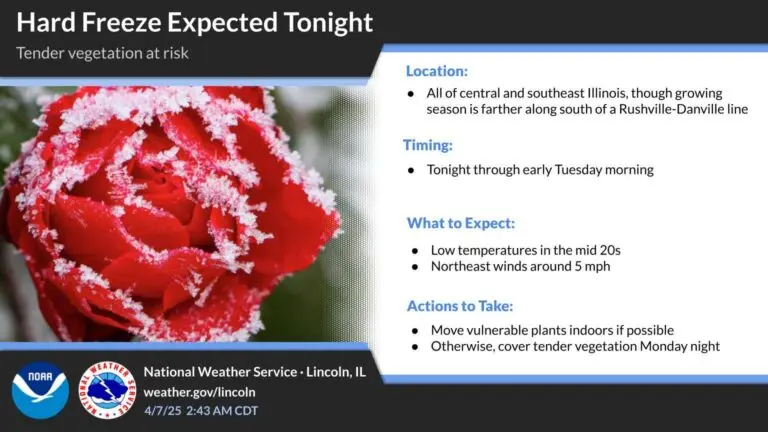
According to the National Weather Service (NWS), a freeze warning is issued when the temperature is expected to fall below freezing for a prolonged period, usually around three hours. These warnings are especially pertinent in late fall and early spring, when fluctuating weather patterns can lead to sudden drops in temperature. Areas at higher elevations or locations with less urban heat often experience freeze warnings more frequently.
Recent Events and Impacts
In recent weeks, the Midwest has experienced several freeze warnings as temperatures plunged unexpectedly. States like Illinois and Indiana have seen reports of crop damage due to sudden frosts occurring just after farmers had planted their spring crops. The United States Department of Agriculture (USDA) has warned farmers to safeguard sensitive crops and advised them on how to protect young plants through various methods such as covering them or using heating pads.
Precautions to Take During a Freeze Warning
It’s essential for residents in affected areas to take precautions when a freeze warning is issued. Homeowners should insulate outdoor pipes to prevent them from freezing, and gardeners should cover any susceptible plants with blankets or tarps. Drivers should also be cautious, as early morning freezes can create hazardous driving conditions due to black ice.
Conclusion and Future Outlook
As climate patterns continue to shift, weather experts anticipate that freeze warnings may become more unpredictable, impacting various sectors from agriculture to infrastructure. Increased awareness and preparedness will be vital in mitigating the effects of these warnings. For residents, keeping informed through local weather updates and understanding the importance of freeze warnings can enhance safety and resilience against these sudden weather changes.