Introduction
The National Weather Service (NWS) often issues a dense fog advisory to alert the public about hazardous weather conditions caused by low visibility. These advisories are critical for ensuring public safety, particularly for drivers and pedestrians in affected areas. With the growing unpredictability of weather patterns, understanding dense fog advisories is essential for everyone.
The Nature of Dense Fog
Fog is formed when water vapor condenses into tiny water droplets suspended in the air, leading to decreased visibility. A dense fog advisory is typically issued when visibility is reduced to less than a quarter-mile (400 meters). Such conditions can make driving perilous, increasing the likelihood of accidents. In recent weeks, several regions across the United States have experienced significant fog events, prompting the NWS to issue multiple advisories.
Current Events and Alerts
As of this week, the NWS has issued dense fog advisories in various areas, including the Midwestern states and parts of the Northeast. For instance, locations like Chicago, IL, and Indianapolis, IN, have reported visibility dropping to as low as 100 feet in certain areas. These conditions have not only affected local traffic but have also led to the cancellation of flights and disruptions in public transport.
Safety Tips During Dense Fog
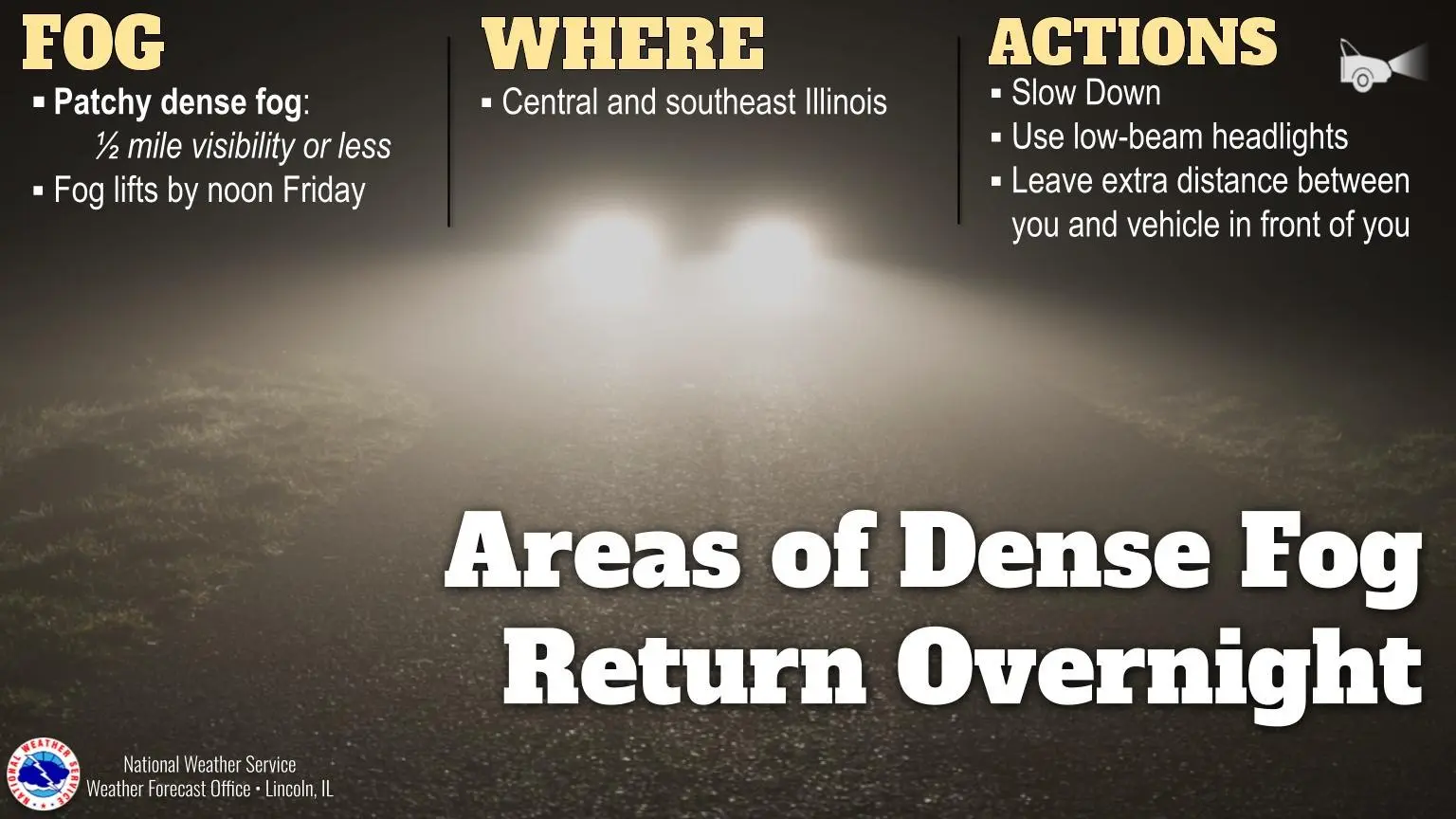
During a dense fog advisory, it is crucial to follow safety guidelines to minimize risks. Here are some key tips for navigating foggy conditions:
- Drive at reduced speeds and increase your following distance to allow for longer stopping time.
- Use low beam headlights instead of high beams to prevent reflections that can impair vision.
- Remain alert and avoid distractions such as mobile devices.
- If visibility becomes too poor, safely pull over to the side of the road and wait until conditions improve.
Conclusion
Dense fog advisories are a vital tool for informing and protecting the public from hazardous conditions. With the rise of weather variability, maintaining awareness of these advisories can significantly enhance safety. As climate patterns continue to change, residents are urged to stay informed through reliable weather channels and utilize caution during adverse weather conditions. Understanding and respecting dense fog advisories could mean the difference between a safe journey and a dangerous situation.