Introduction
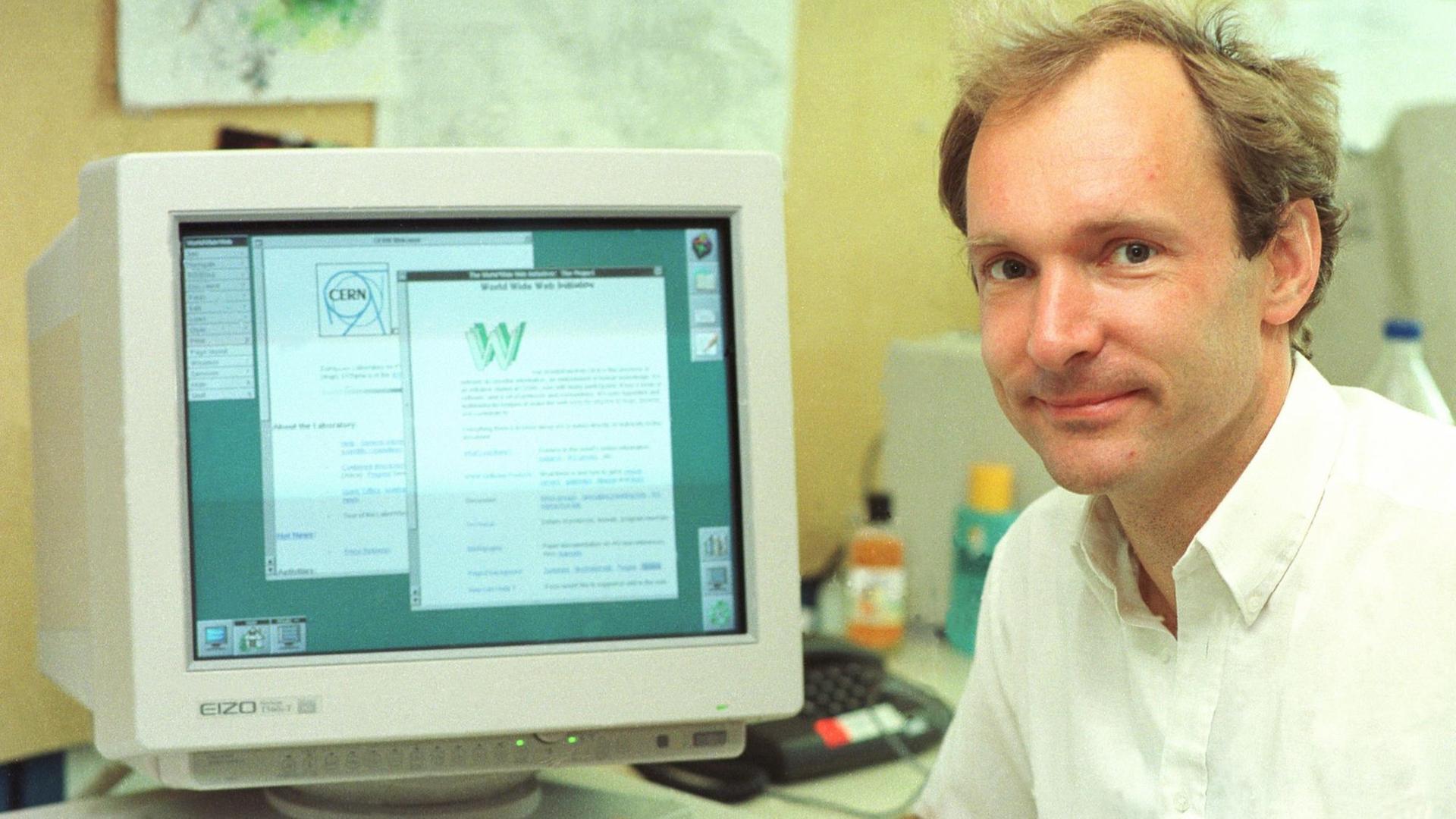
Tim Berners-Lee, an English computer scientist, is best known as the pioneer behind the World Wide Web. His innovative contributions have reshaped how we communicate, access information, and conduct business. In today’s digital age, understanding his impact is crucial as we navigate ongoing developments in technology and internet governance.
Early Life and Education
Born on June 8, 1955, in London, Tim Berners-Lee showed an early interest in computing and electronics. He studied physics at Queen’s College, Oxford, where he constructed a computer from scratch. After graduating in 1976, he began his career as an engineer, eventually working at CERN, the European Organization for Nuclear Research, in 1984.
The Invention of the World Wide Web
While at CERN, Berners-Lee recognized the need for a unified system to share information among researchers and proposed a project in 1989. This project became the World Wide Web, which was released to the public in 1991. He introduced HTML (Hypertext Markup Language), HTTP (Hypertext Transfer Protocol), and URIs (Uniform Resource Identifiers), forming the foundational protocols that power the Web today.
His vision was not just to create a technical solution but to promote a decentralized web where users could freely access and share information. His belief in the internet as a tool for democratization and openness continues to shape discussions around internet freedom today.
Recent Developments and Advocacy
Berners-Lee has remained deeply involved in web development throughout his career. In recent years, he has continued to advocate for a more open, accessible web. In 2019, he announced the establishment of “Inrupt,” a decentralized web platform aimed at giving users control over their personal data. His ongoing work emphasizes the importance of privacy and data ownership amid rapid technological advancement.
Conclusion
Tim Berners-Lee’s legacy is profound, as he has fundamentally transformed human interaction with information technology. As we navigate challenges like misinformation, data privacy, and the digital divide, understanding the principles he laid down is more important than ever. His vision for a free and accessible web serves as a guiding light as we work towards a better digital future. As we look ahead, Berners-Lee’s influence will undoubtedly continue to resonate throughout the advancements of technology and internet policy.