Introduction to Pangea
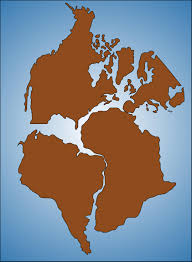
Pangea, the supercontinent that existed approximately 335 to 175 million years ago, is a critical concept in understanding Earth’s geological history. As the most recent supercontinent, Pangea’s formation and eventual breakup played a crucial role in shaping the continents as we know them today. The study of Pangea helps geologists and scientists piece together the puzzle of Earth’s tectonic activity, climate changes, and biodiversity across millennia.
Formation of Pangea
The formation of Pangea began during the Carboniferous period, when various landmasses came together due to the drift of tectonic plates. This colossal landmass included almost all of Earth’s landmasses, bringing together continents that are now widely separated, such as North America, South America, Europe, Africa, Asia, and Antarctica. Researchers believe that the fusion occurred over tens of millions of years, exhibiting how adaptable and dynamic Earth’s lithosphere can be.
Breakup and its Impacts
Pangea began to break apart during the Jurassic period, around 175 million years ago, leading to the formation of the Atlantic Ocean. This process was marked by considerable geological activity, including the formation of mountain ranges and volcanic events. The separation of Pangea significantly influenced global climate, leading to varying weather patterns and contributing to the rich diversity of life forms as species evolved in isolation or adapted to new environments.
Scientific Significance of Pangea
The study of Pangea has immense significance in modern geology, particularly in the field of plate tectonics. It provides evidence for continental drift, a theory that helps explain how continents shift position over geological time. The remnants of Pangea can still be seen today, where similar rock formations, fossilized remains, and geologic features are found across several continents. For example, coal deposits in North America and Europe share geological characteristics, indicating they were once part of the same ecosystem.
Conclusion
Understanding Pangea is critical for educators, students, and anyone interested in Earth sciences. As we explore the geological history of our planet, the lessons drawn from Pangea teach us about Earth’s expansive history, the interconnectedness of land masses, and the ongoing dynamism of our planet’s surface. Future research on supercontinents like Pangea can provide insights into climate change, geological hazards, and biodiversity. The story of Pangea is a reminder of the constant change of our Earth, making it both a fascinating and vital subject of study.