Introduction
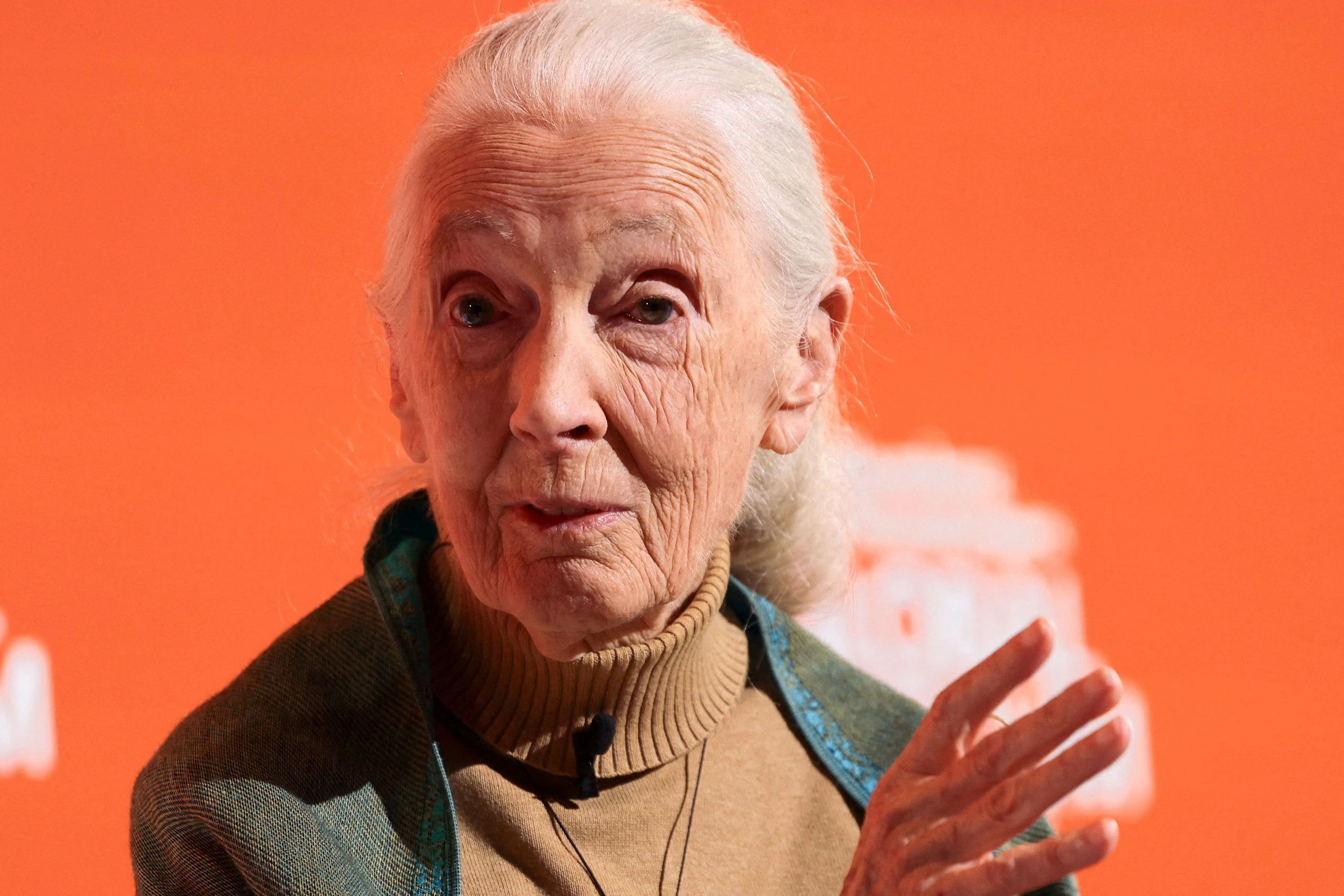
Jane Goodall, renowned primatologist and anthropologist, has dedicated her life to studying chimpanzees and advocating for wildlife and environmental conservation. Her groundbreaking work in the 1960s not only changed the way we understand primates but also raised global awareness about the urgent need to protect our planet’s biodiversity. As the world faces escalating environmental challenges, Goodall’s insights and advocacy have become increasingly relevant.
A Pioneering Career
Born on April 3, 1934, in London, England, Jane Goodall’s fascination with animals began in childhood. At just 26, she traveled to Tanzania to study the behavior of wild chimpanzees in Gombe Stream National Park. Her revolutionary approach included patiently observing the chimps in their natural habitat, allowing her to uncover their complex social interactions, tool use, and emotional expressions.
Her findings, documented in her book In the Shadow of Man, challenged earlier notions that humans were the only tool-making species and highlighted the emotional depth of non-human animals. Goodall’s research also raised awareness about the threats faced by chimpanzees and their habitats, laying the groundwork for her future conservation efforts.
Conservation and Advocacy
In 1977, Jane Goodall founded the Jane Goodall Institute, which focuses on wildlife research, conservation, and community-centered development across Africa. The institute has played a pivotal role in protecting chimpanzees and their habitats, while also promoting sustainable development in local communities. Goodall’s holistic approach intertwines environmental conservation with social progress, emphasizing the importance of education and empowerment.
Moreover, Goodall’s outreach extends beyond science. She has been a powerful advocate for animal rights and environmental issues, speaking to millions globally. Her Roots & Shoots program, established in 1991, inspires young people to engage in hands-on projects to improve their communities and the environment. This initiative has spread to over 60 countries, showing the profound impact of youth engagement in conservation.
Conclusion
Jane Goodall’s unwavering commitment to wildlife and habitat conservation has left an indelible mark on our understanding of the natural world. As concerns about climate change and biodiversity loss grow, her voice continues to resonate, urging each of us to be responsible stewards of the Earth. Looking ahead, Goodall’s legacy serves as a reminder that through education, empathy, and action, we can foster a more sustainable and harmonious relationship with the planet. Her work encourages future generations to take bold steps toward conservation and to recognize the interconnectedness of all living beings.