Introduction
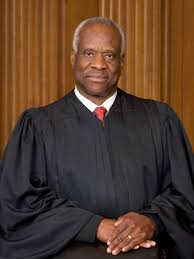
Justice Clarence Thomas has been a pivotal figure in the United States Supreme Court since his confirmation in 1991. As the longest-serving current justice, Thomas has played a significant role in shaping the judiciary’s direction on various critical issues, including affirmative action, gun rights, and free speech. His opinions and legal philosophy have sparked both support and criticism, making him a central figure in contemporary discussions surrounding the Supreme Court’s influence on American law and society.
Background and Appointments
Clarence Thomas was appointed by President George H.W. Bush, succeeding Justice Thurgood Marshall, the first African American justice. His confirmation hearings were historically contentious, particularly due to allegations of sexual harassment from Anita Hill, a former employee. Despite the controversies, Thomas was confirmed by a narrow margin of 52-48. Since then, he has maintained a conservative judicial philosophy, often siding with the Court’s more right-leaning justices.
Legal Philosophy and Key Decisions
Thomas bases his legal reasoning on originalism and textualism, advocating for an interpretation of the Constitution that prioritizes the original meaning of the text at the time it was written. Notably, he has consistently opposed affirmative action policies, citing arguments that they perpetuate racial discrimination, and has written multiple dissenting opinions on related cases, including Fisher v. University of Texas.
In addition, Thomas has frequently voiced concerns regarding the Second Amendment and has pushed for a broader interpretation in cases dealing with gun ownership rights. His opinions illustrate a strong commitment to protecting individual liberties as prescribed in the Constitution.
Recent Developments
Recently, the Supreme Court has addressed several contentious issues, including abortion rights and executive authority. Thomas’s vote has been critical in cases such as Dobbs v. Jackson Women’s Health Organization, which overturned Roe v. Wade, reshaping the legal landscape surrounding reproductive rights in the United States.
Additionally, his stance on issues surrounding voting rights and the integrity of elections is increasingly pivotal, especially as discussions regarding gerrymandering and election laws take center stage. As states implement various voting restrictions, Thomas’s opinions may set significant precedents moving forward.
Conclusion
Justice Clarence Thomas’s impact on the American legal framework is undeniably profound. His commitment to originalism and his often controversial opinions have cemented his role as a formidable figure in the ongoing debates over constitutional interpretation, personal freedoms, and social justice in the country. As the Supreme Court continues to face a range of pressing legal challenges, observers will undoubtedly keep a close eye on Thomas’s contributions and legacy, recognizing his critical role in shaping the future of the judiciary in the United States.