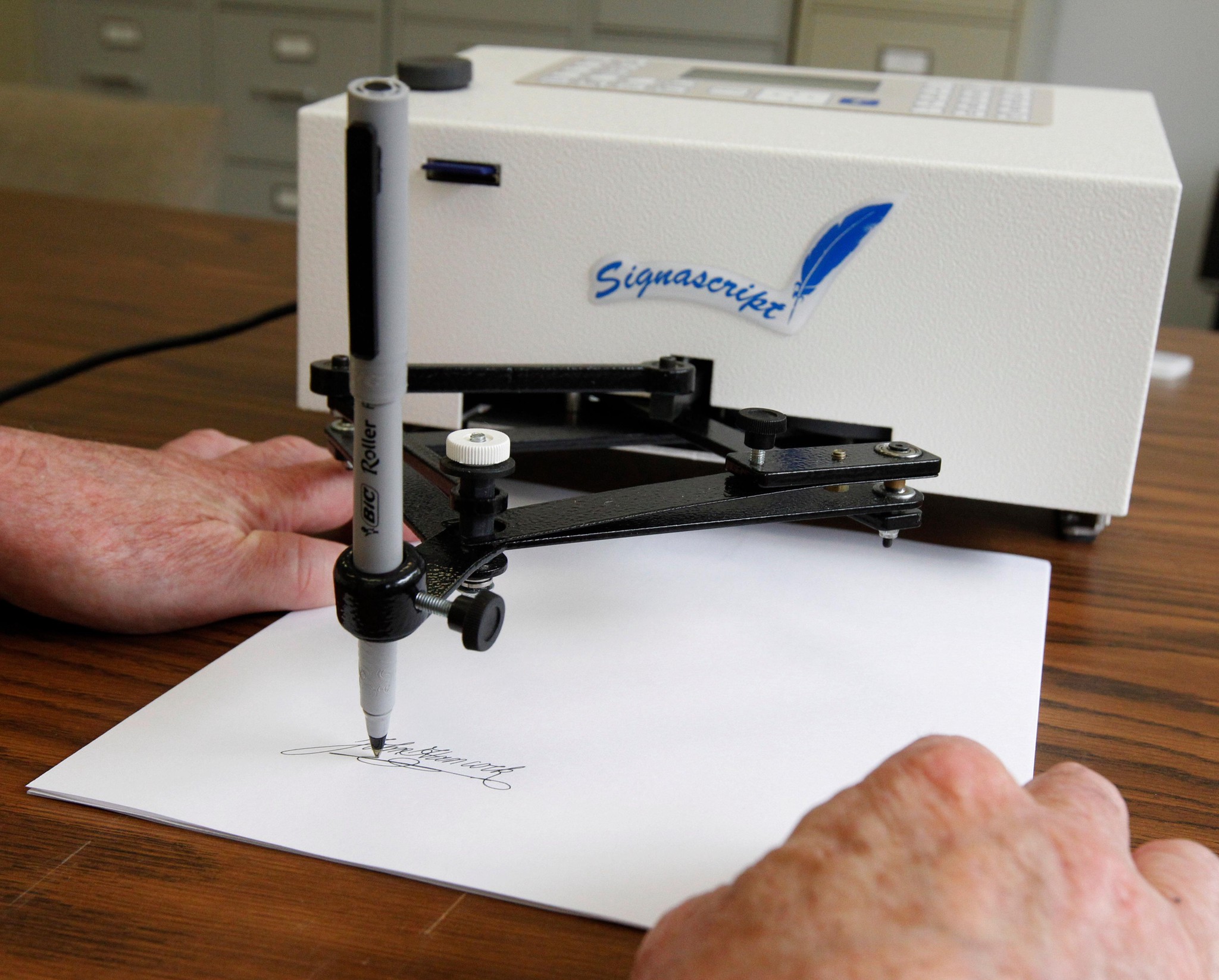
Introduction to Autopen Technology
Autopen technology has become a significant tool in many sectors, from government offices to private corporations. As the need for efficiency grows in administrative tasks, the autopen offers a quick and reliable solution for automating the signing of documents. Understanding autopen and its implications is crucial in today’s fast-paced world where authenticating documents quickly is essential.
What is Autopen?
An autopen is a machine that automatically reproduces a person’s signature, allowing for duplication at a speed and scale that would be impossible by hand. These devices were originally developed for use in high-volume environments, such as by politicians who needed to sign large volumes of correspondence or by corporations processing many contracts.
Current Developments in Autopen Technology
In recent years, autopen technology has seen advancements that have improved its efficiency and accuracy. Modern autopens come equipped with features like programmable settings, allowing them to vary the pressure and angle of the pen for a more authentic appearance. This ensures the reproductions are difficult to distinguish from a handwritten signature. Many companies are now integrating these devices into their workflow, as remote work has increased the reliance on digital documentation.
Applications of Autopen in Various Industries
The use of autopen spans several industries. In government, for example, politicians use autopens to manage the high volume of correspondence they generate. In the corporate world, companies utilize autopens for signing contracts, agreements, and other official documents, drastically reducing turnaround times. Non-profit organizations also leverage autopen technology for thank-you letters and donor acknowledgments, allowing for a personal touch without the labor-intensive process of hand-signing each letter.
Legal and Ethical Considerations
Despite its convenience, the use of autopens raises legal and ethical concerns, mainly regarding the authenticity of signatures. Some jurisdictions require handwritten signatures for certain documents, while others allow for digital signatures, which can sometimes include autopen reproductions. Organizations must be aware of these regulations and ensure they are compliant. Transparency in communication regarding the use of autopen technology is also crucial in maintaining trust.
Conclusion
As businesses and governmental organizations continue to seek efficiency and faster processing times, autopen technology will likely play an increasingly important role in document handling. While its use simplifies tasks and reduces workload, it also brings forth a set of challenges regarding the authenticity and legality of signatures. The evolving landscape of technology necessitates that both individuals and organizations remain informed and compliant to navigate the complexities that autopen technology brings.