Introduction
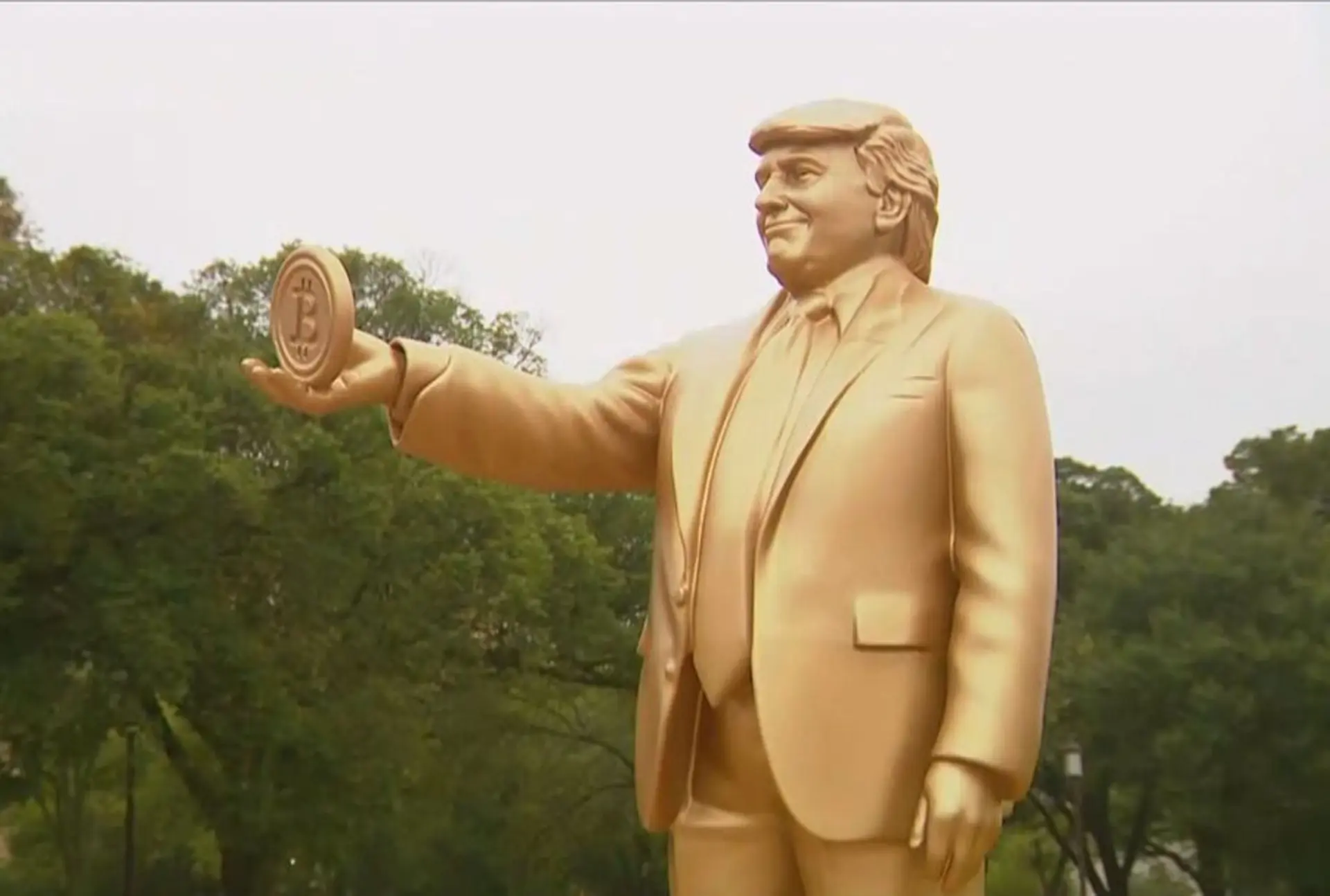
In a world where politics and finance often intersect, a new statue of Donald Trump holding a Bitcoin has emerged, igniting conversations about the relationship between cryptocurrency and American politics. This installation, which debuted at a cryptocurrency convention in Las Vegas, draws attention not only for its artistic expression but also for its commentary on the populist movement surrounding digital currency. Its relevance in today’s market and political landscape makes it an intriguing topic for discussion.
The Statue’s Creation and Design
The Trump Bitcoin statue was created by artist and cryptocurrency enthusiast, Joe Rizzo, who aimed to encapsulate the controversial former president’s influence on the cryptocurrency movement. The statue features Trump with a golden Bitcoin in one hand and a smartphone in the other, symbolizing the merging of traditional political influence with modern digital finance. Positioned in the heart of the convention, the statue invites attendees to reflect on cryptocurrency’s role as a revolutionary tool for economic freedom.
Reactions from the Public and Experts
Reactions to the statue have been mixed. Supporters of the piece argue that it represents a fundamental shift in how political figures relate to emerging technologies, showcasing Trump as a visionary who embraced Bitcoin during his presidency. They claim it highlights a new era of financial independence and innovation, indicating that even politicians must evolve with the times.
Conversely, critics have labeled the statue as a misguided celebration of a figure known for his controversial policies and rhetoric. Some believe it trivializes the serious nature of financial currency, while others see it as mere political satire. Economic analysts warn that promoting figures rather than ideas could lead to misguided investment decisions in the volatile world of cryptocurrency.
The Broader Implications
The Trump Bitcoin statue is not just an artistic statement; it’s a reflection of broader social sentiments surrounding cryptocurrency and its proponents. As digital currencies continue to gain traction, the merging of political figures with these new financial technologies raises questions about the future of both politics and economy. Will we see more installations like this as the clash of the cryptocurrency and political worlds deepens? Will future political figures embrace or reject cryptocurrencies further?
Conclusion
The Trump Bitcoin statue serves as a provocative symbol in understanding the evolution of both cryptocurrency and the political landscape. Whether it sparks favorable views or incites debate, it underscores the growing intersection of politics and technology. As cryptocurrency continues to evolve and play a larger role in everyday economics, the public’s engagement with both political figures and financial concepts will only deepen, making discussions around such installations increasingly significant for all consumers and voters.