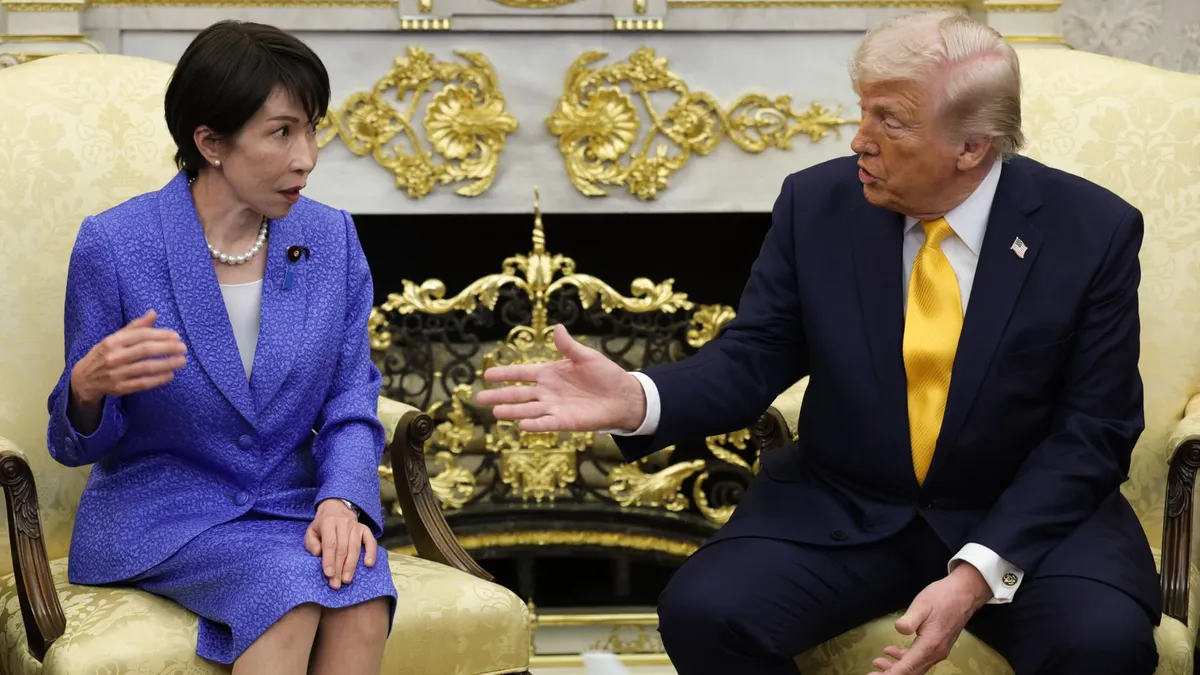
Before the recent meeting between Donald Trump and Japan’s Prime Minister Sanae Takaichi, expectations were largely centered on diplomatic discussions regarding military cooperation and regional security. The historical context of Pearl Harbor, a pivotal moment in U.S. history, loomed large as a reminder of the consequences of surprise attacks and the importance of strategic communication among allies.
However, the meeting took a decisive turn when Trump referenced the infamous Pearl Harbor attack, stating, “Who knows better about that. Why didn’t you tell me about Pearl Harbor? You believe in surprise much more so than I.” This comment not only highlighted the historical significance of the 1941 attack, which resulted in over 2,400 deaths, but also underscored the contemporary implications of military strategy and surprise tactics in modern warfare.
The immediate effect of this reference was a stark reminder of the delicate balance of trust and communication among nations, particularly in light of recent U.S. military actions in Iran. Trump noted that the U.S. did not inform its allies about the attack on Iran to maintain the element of surprise, a decision that has raised eyebrows among international observers.
Japan’s Prime Minister Takaichi responded by clarifying that Japan had no plans to dispatch naval vessels to the Middle East, citing the country’s pacifist constitution that renounces war. This statement reflects Japan’s cautious approach to military engagement, especially in a region fraught with conflict.
In contrast, Germany and France have publicly stated their intention not to participate in military actions related to the Iran conflict, emphasizing a growing divide among Western allies regarding military intervention. This divergence in strategy could have significant implications for future cooperation in global security efforts.
Experts suggest that Trump’s comments may reflect a broader trend of invoking historical events to justify current military strategies. The reference to Pearl Harbor serves as a potent reminder of the past, yet it raises questions about the lessons learned from history and their application to contemporary conflicts.
As the situation evolves, the implications of these discussions will likely resonate beyond the immediate parties involved. The dynamics of U.S.-Japan relations, particularly in the context of military cooperation in the Strait of Hormuz, will be closely monitored.
In summary, the juxtaposition of historical events like Pearl Harbor with modern military strategies highlights the complexities of international relations today. As nations navigate these turbulent waters, the balance between surprise tactics and transparent communication remains crucial.
Details remain unconfirmed.