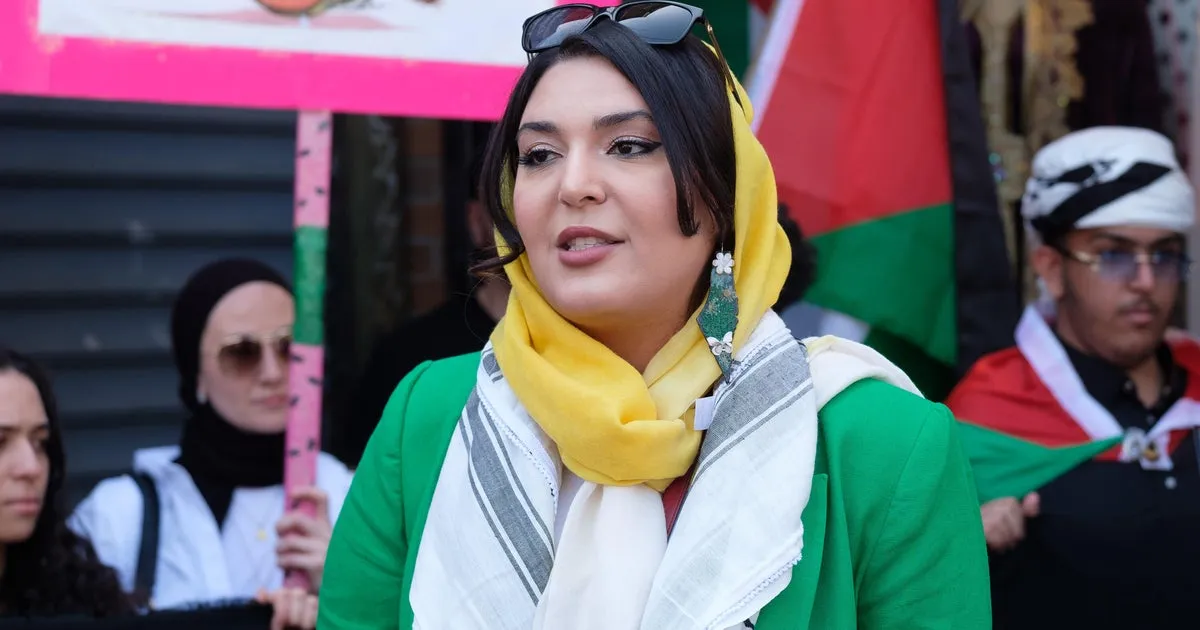
In a chilling turn of events, Nerdeen Kiswani, a 31-year-old co-founder of the activist group Within Our Lifetime, found herself at the center of a thwarted plot that aimed to firebomb her home in Hoboken, New Jersey. The FBI and NYPD’s Racially and Ethnically Motivated Extremism Unit uncovered the scheme, which involved 26-year-old Alexander Heifler, who had allegedly planned to attack Kiswani’s residence.
The investigation revealed that Heifler had been in communication with an undercover NYPD detective for weeks, discussing his intentions to throw Molotov cocktails at Kiswani’s home. Authorities recovered eight Molotov cocktails, with components including Everclear vodka, indicating the seriousness of the threat. Heifler was arrested and charged with unlawfully making and possessing firearms, facing a maximum of ten years in prison for each charge.
Kiswani was informed of the plot against her life by the FBI, expressing gratitude that the attack was thwarted. “I feel very blessed that they were able to thwart this, but it’s something that is a constant possibility for people who speak up on behalf of Palestine,” she stated, highlighting the precarious position of activists advocating for Palestinian rights.
Heifler, a resident of Hoboken, reportedly planned to flee to Israel after executing the attack, raising concerns about the motivations behind his actions. The Jewish Defense League, an organization with a history of violent attacks against Arab American activists during the 1970s and 1980s, has been linked to similar extremist behaviors.
The response from local officials was swift. New York City Mayor Zohran Mamdani emphasized, “Let me be clear: We will not tolerate violent extremism in our city,” reinforcing the commitment to protect individuals regardless of their political beliefs. He further stated, “No one should face violence for their political beliefs or their advocacy.”
NYPD Commissioner Jessica Tisch remarked on the effectiveness of the operation, stating, “This is exactly how our intelligence and counterterrorism operation is designed to work.” The ongoing investigation suggests that more charges against Heifler may be forthcoming as authorities continue to assess the full scope of the threat.
The situation underscores the risks faced by activists like Kiswani, who advocate for marginalized communities. As the investigation unfolds, the implications of this incident resonate deeply within activist circles, raising awareness about the dangers of political extremism and the need for protective measures for those who speak out.
As of now, Kiswani remains vigilant, aware that the threat of violence is an ever-present reality for activists in today’s charged political climate. The incident serves as a stark reminder of the challenges faced by those who dare to challenge the status quo.