Introduction
The battle for survival in nature is an ancient story, and one of the most thrilling eras to study is the Pleistocene, often referred to as the Ice Age. This period, stretching from approximately 2.6 million to about 11,700 years ago, featured some of the largest land mammals to roam the Earth, including the woolly mammoth. Mammoths not only played a crucial role in their ecosystems but also faced numerous predators. Understanding these interactions unveils critical insights into prehistoric life and the adaptability of species, making it a compelling subject for researchers and enthusiasts alike.
Mammoths and Their Predators
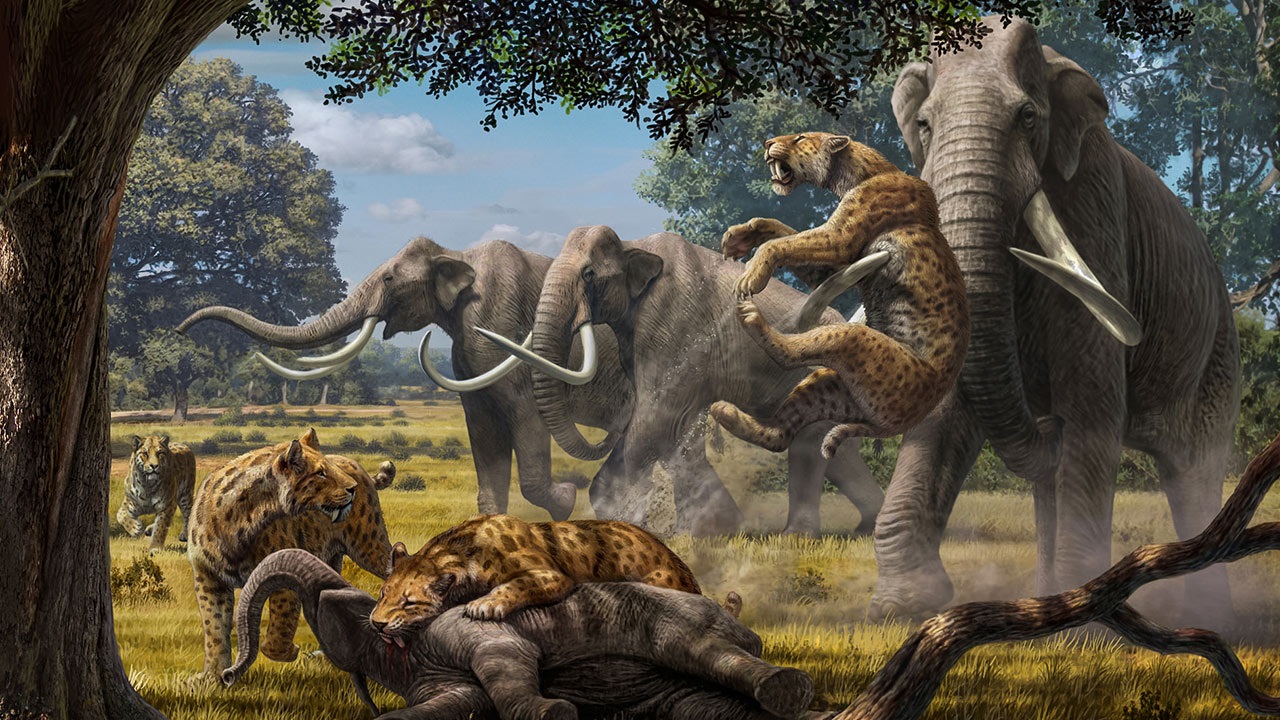
Mammoths, particularly the woolly varieties, were formidable creatures characterized by their massive size, long curved tusks, and thick fur, adapted to cold environments. They were herbivores that thrived in the tundra and grasslands of the northern hemisphere. Despite their size, mammoths were not invincible. During the Pleistocene, they encountered various predators, including saber-toothed cats and packs of dire wolves.
The saber-toothed cat, known scientifically as Smilodon, was one of the apex predators of its time, equipped with long, curved saber-like teeth. These cats often hunted in ambush, waiting for the right moment to strike at a vulnerable mammoth, particularly the young or elderly individuals. Meanwhile, dire wolves, known for their pack hunting strategy, would often target mammoth calves or injured adults, using their numbers to overwhelm the massive creatures.
Recent Discoveries
Recent archaeological finds have shed light on specific instances of these predator-prey interactions. In 2022, researchers in Alaska discovered fossilized remains of a woolly mammoth that bore distinct bite marks consistent with those from prehistoric predator species, providing direct evidence of these encounters. Additionally, the study of coprolites (fossilized feces) from the time period has offered insights into the diets of these predators, revealing that mammoths were, indeed, on the menu.
Conclusion
The interactions between mammoths and their predators illustrate the complex dynamics of ancient ecosystems. Understanding these relationships provides valuable lessons about survival, adaptation, and extinction in the face of environmental changes. As climate change remains a pressing issue in today’s world, studying the past interactions of mammoths and their predators could offer lessons on how species adapt to rapidly changing environments and highlights the importance of biodiversity in maintaining ecological balance. This continued research into prehistoric life reminds us of our connection to the past and the ongoing journey of survival across ages.