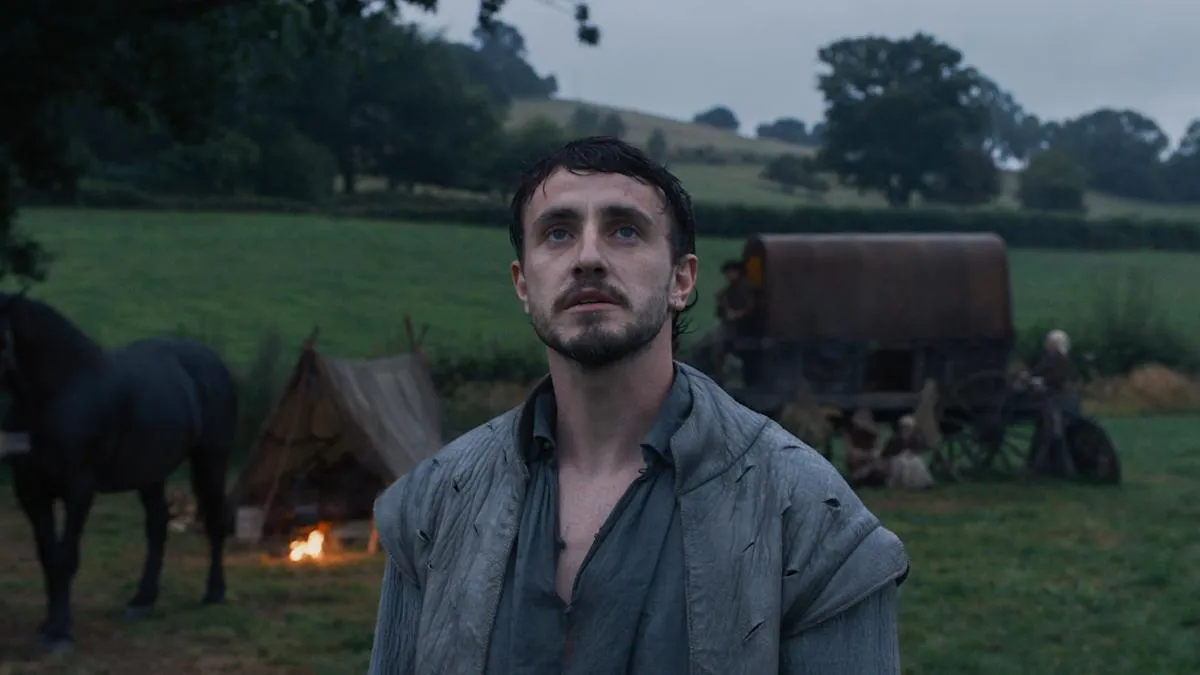
“It just felt really emblematic to me that on top of everything else, we haven’t even got her name right.” This poignant statement by Maggie O’Farrell encapsulates the essence of her acclaimed novel, Hamnet, which delves into the life of Agnes Shakespeare, often overshadowed by her husband, the legendary playwright William Shakespeare. O’Farrell’s work not only brings to light the historical inaccuracies surrounding Agnes, but it also emphasizes the emotional weight of loss and grief, particularly in the context of their son, Hamnet, who died at the tender age of 11.
The film adaptation of Hamnet, directed by Chloé Zhao, has generated significant buzz, receiving eight Oscar nominations, including Best Picture. Jessie Buckley portrays Agnes, a role that has already garnered her critical acclaim. Buckley’s performance has been recognized with the Best Actress Award at the 2026 Academy Awards, further highlighting the depth of O’Farrell’s characters and the story’s emotional resonance.
Agnes Shakespeare, often referred to as Anne Hathaway in historical texts, is a figure whose life has been largely obscured by the fame of her husband. O’Farrell’s choice to use the name Agnes reflects a commitment to historical accuracy, as evidenced by Richard Hathaway, Agnes’s father, who referred to her as such in his will. This attention to detail enriches the narrative, allowing readers and viewers to connect more profoundly with the characters.
The tragic death of Hamnet Shakespeare, whose cause remains unknown, is a pivotal moment in both the novel and the film. Theories suggest he may have succumbed to the bubonic plague, a haunting parallel to contemporary experiences of loss during the pandemic. As O’Farrell notes, “Thanks to the pandemic, our own plague, we too need art to make sense of those bewildering deaths, to offer solace and escape, and to remind us of the fierce resilience of humanity.” This sentiment resonates deeply in a world still grappling with the effects of loss.
In a striking contrast between the book and its theatrical adaptation, the play offers audiences the unique experience of hearing a speech from Hamlet, allowing them to feel the personal grief that may have influenced Shakespeare’s writing. This connection between personal tragedy and artistic expression is a theme that O’Farrell masterfully explores in her work.
O’Farrell’s exploration of Agnes’s life not only sheds light on a historical figure often overlooked but also invites a broader discussion about the narratives we choose to elevate in literature and film. The adaptation of Hamnet for the stage at the Swan Theatre in Stratford-upon-Avon in 2023 further cements the story’s place in contemporary culture, encouraging audiences to reflect on the complexities of familial relationships and the impact of grief.
As the film continues to garner attention and accolades, the legacy of O’Farrell’s work remains significant. The story of Agnes and Hamnet Shakespeare serves as a reminder of the power of storytelling to illuminate the past and resonate with present experiences. Details remain unconfirmed about future adaptations or projects related to O’Farrell’s work, but the impact of her storytelling is undeniably profound.