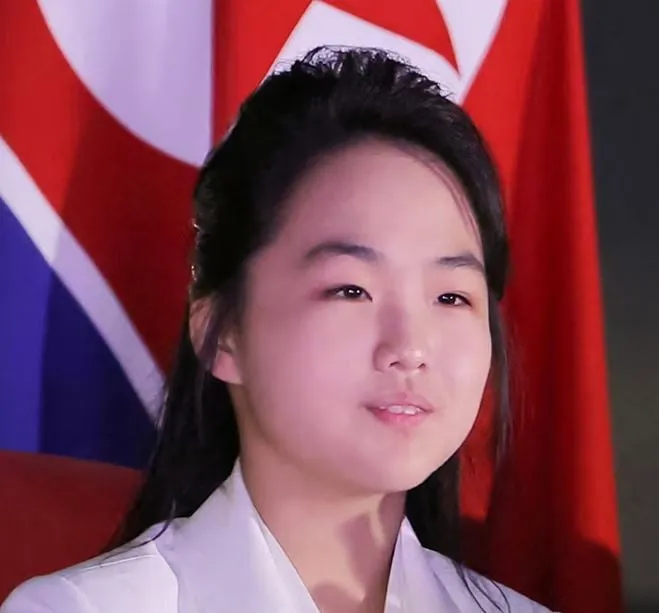
In a significant development regarding North Korea’s leadership dynamics, Kim Ju Ae, the 13-year-old daughter of Kim Jong Un, is being identified as a potential successor to her father, according to South Korea’s National Intelligence Service (NIS). This assertion marks a pivotal moment in a nation traditionally ruled by male members of the Kim family since its establishment in 1948.
The NIS has noted that Kim Ju Ae has been accompanying her father to various high-profile events since late 2022, including military displays, which are seen as efforts to normalize the concept of a female heir. NIS Director Lee Jong Seok remarked, “The girl could be considered Mr. Kim’s successor,” emphasizing that this assessment is based on intelligence rather than mere speculation.
Kim Ju Ae’s public appearances, particularly in military settings where she has been photographed driving a tank, are part of a broader strategy to bolster her credentials and mitigate skepticism regarding a woman taking the helm of North Korea’s leadership. As the NIS director stated, “North Korean authorities appeared to have organized such events to build up her military credentials and ‘reduce scepticism about a woman successor.'” This is a notable shift in a society where the leadership has been exclusively male for decades.
Despite these developments, uncertainties persist. The exact age of Kim Ju Ae has not been officially confirmed by North Korean state media, and it remains unclear whether Kim Jong Un has other children. Additionally, the credibility of reports concerning her siblings is questioned. Details remain unconfirmed.
Kim Jong Un himself inherited power from his father, Kim Jong Il, in late 2011, and since then, speculation about the future leadership of North Korea has been rife. The NIS first referred to Kim Ju Ae as a likely heir in early 2024, indicating a growing recognition of her potential role in the regime’s future.
In contrast, Kim Yo Jong, Kim Jong Un’s sister, has been noted by the NIS as lacking substantial powers, further emphasizing the unique position Kim Ju Ae may occupy within the ruling family.
As Kim Ju Ae continues to make public appearances, observers are closely monitoring the North Korean regime’s evolving narrative around female leadership. Some analysts remain skeptical, citing the deeply ingrained male-centered societal norms that could hinder acceptance of a woman leader.
In summary, Kim Ju Ae’s emergence as a potential successor to Kim Jong Un represents a significant development in North Korea’s political landscape, one that could reshape the future of the regime as it navigates the complexities of succession and gender in leadership.