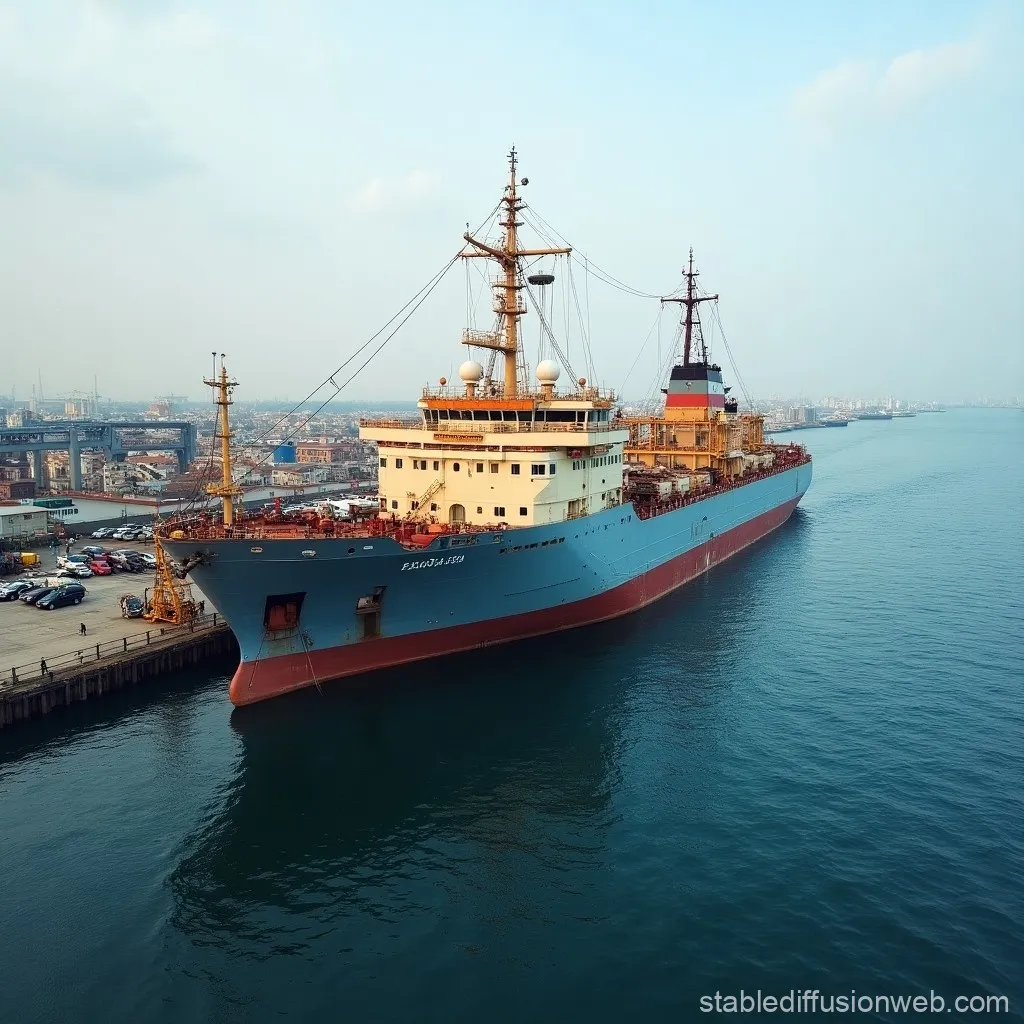
On April 19, 2026, the US military engaged in a significant maritime operation involving the Iranian-flagged commercial vessel Touska, which had been attempting to breach a naval blockade while en route to Bandar Abbas, Iran. This incident unfolded in the Arabian Sea and was marked by a six-hour standoff, during which US Marines ultimately boarded the vessel.
According to documents and military sources, the USS Spruance played a crucial role in this operation by disabling the ship’s propulsion system after it failed to comply with warnings issued by US forces. This action was taken in light of the ship’s prior history of illegal activity, which had placed it under US Treasury sanctions.
The situation escalated when Iran’s military command accused the United States of violating a ceasefire agreement by firing upon one of its commercial vessels. In response to these claims, Iranian Foreign Minister Mohammad Reza Aref stated that “the choice is clear regarding the security situation in the Strait of Hormuz,” indicating Tehran’s readiness to defend its interests.
Following the boarding of Touska, President Donald Trump remarked that “the Iranian crew refused to listen, so our Navy ship stopped them right in their tracks by blowing a hole in the engine room.” This statement underscores the aggressive posture adopted by US forces during this encounter.
Iran’s condemnation of this action was swift; officials labeled it as ‘piracy’ and asserted that it constituted a total violation of their ceasefire agreement. Abbas Araghchi, an Iranian diplomat, emphasized that threats against Iranian ports and vessels were clear signs of America’s ill will.
The operation was accompanied by a release of video footage from the US military documenting the seizure, which further inflamed tensions between Washington and Tehran. As reported, Iran has vowed to retaliate for what they perceive as an unjust act against their sovereignty.
As events continue to unfold, analysts are closely monitoring the implications of this maritime confrontation not only for US-Iran relations but also for broader regional stability. The seizure of Touska could represent a turning point in how both nations engage on maritime issues moving forward.
The backdrop to this incident is rooted in a long history of US maritime operations against Iranian vessels in contested waters—an ongoing dynamic that has often led to confrontations at sea.
Details remain unconfirmed regarding any potential retaliatory measures Iran may take following this incident. The stakes are high as both nations navigate through increasingly turbulent waters.