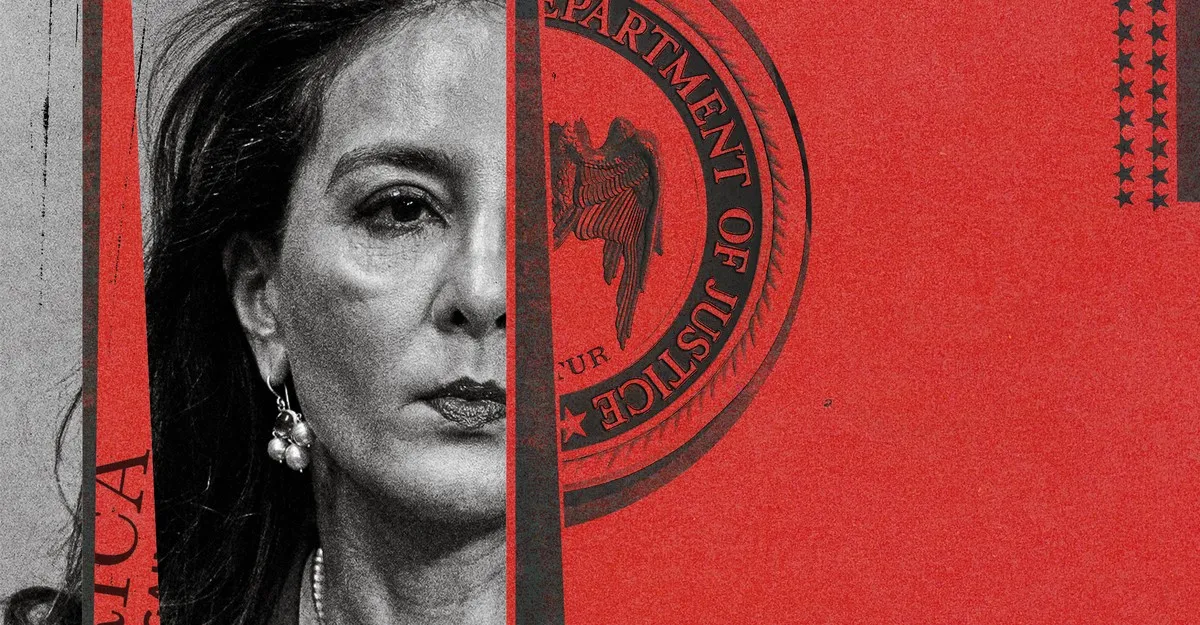
The Civil Rights Division has historically been responsible for protecting and defending people in positions of powerlessness. However, under the leadership of Harmeet Dhillon, the division has undergone a significant transformation that has raised eyebrows and sparked controversy. Appointed as the Assistant Attorney General for Civil Rights during the Trump administration, Dhillon has been at the center of a storm regarding her approach to civil rights enforcement and the ideological direction of the division.
Since taking office, Dhillon has faced criticism for her efforts to reshape the Civil Rights Division, which is tasked with enforcing civil rights laws across the United States. Critics argue that her leadership has led to a mass exodus of staff, with nearly 400 of the 700 employees in the division having left by January 2025. This includes a staggering 76 percent of employees in leadership roles, raising concerns about the division’s capacity to fulfill its mandate effectively.
Dhillon has articulated a vision for the division that she claims is focused on enforcing federal civil rights laws rather than adhering to what she describes as “woke ideology.” In her own words, she stated, “The job here is to enforce the federal civil-rights laws, not woke ideology.” This statement encapsulates her approach, which seeks to pivot the division away from what she perceives as a liberal agenda that has dominated civil rights discussions in recent years.
One of the most notable actions taken by Dhillon was the termination of a settlement aimed at improving sanitation in Lowndes County, Alabama. This decision has been met with backlash from various civil rights advocates who argue that it undermines efforts to address systemic inequalities in marginalized communities. Observers have pointed out that such moves could have long-lasting implications for civil rights enforcement across the nation.
In a recent development, the Department of Justice opened an investigation into an alleged assault against journalist Savanah Hernandez during a protest, which has further spotlighted Dhillon’s leadership. Three individuals were arrested for the assault, and a fourth was apprehended for obstruction with force against a deputy officer. Following the incident, Dhillon retweeted a post confirming that the FBI was investigating the alleged assault, indicating her engagement with current civil rights issues.
Despite the controversies surrounding her tenure, Dhillon remains steadfast in her commitment to changing the Civil Rights Division permanently. She has expressed a desire to create a division that aligns more closely with her vision of civil rights enforcement. “Nobody had that vision of, like, We’re going to brutally change this place to how it should be,” she remarked, suggesting that her approach is both deliberate and transformative.
As the Civil Rights Division continues to navigate these turbulent waters, the future remains uncertain. With significant staff departures and a clear ideological shift, many are left wondering how the division will fulfill its critical role in protecting civil rights moving forward. The implications of Dhillon’s leadership will likely be felt for years to come, as the division grapples with its identity and mission in an increasingly polarized political landscape.