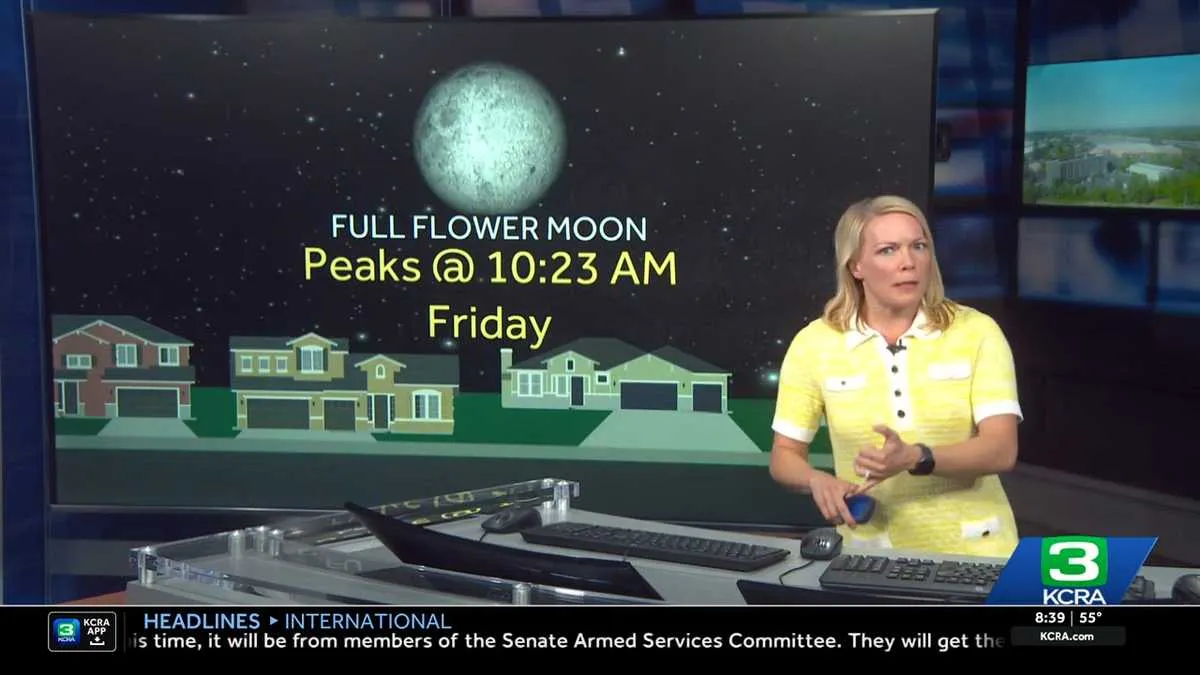
The upcoming Flower Moon is set to peak on May 1, 2026, at 10:23 am PST, presenting a unique opportunity for skywatchers as it will appear smaller than usual due to its designation as a micromoon.
This lunar event occurs when the moon is at its farthest distance from Earth, approximately 252,360 miles away—significantly more than its average distance of about 238,855 miles. On the nights of May 1 and May 2, the Flower Moon will exhibit an impressive illumination of 99%, reaching full brightness at precisely 1:23 p.m. EDT on May 1.
The name ‘Flower Moon’ derives from the blooming flowers that typically grace North America during the spring season. It is noteworthy that May will feature two full moons; the second one, termed a ‘Blue Moon’, will occur on May 31. This nomenclature refers to the rare occurrence of having two full moons within a single month.
Key statistics:
- The Flower Moon peaks at 10:23 am PST on May 1.
- It will achieve full illumination at 1:23 p.m. EDT on the same day.
- The moon’s size during this micromoon phase will measure approximately 29.72 arcminutes compared to the average size of around 31 arcminutes.
Experts note that such lunar events attract considerable attention among enthusiasts and casual observers alike. Catherine Pilachowski mentioned that “the first full moon of the month, known as the flower moon, reaches peak fullness at 1:23 p.m. ET on May 1.” This statement underscores the significance of this celestial event in the context of spring blooms and lunar observation.
As skywatchers prepare for this event, they can expect clear views towards the southeast horizon where the Flower Moon will rise after sunset at approximately 7:26 pm PST on May 1. With Venus and Jupiter also visible in the night sky during this period, observers may find an enriching experience in their night sky explorations.