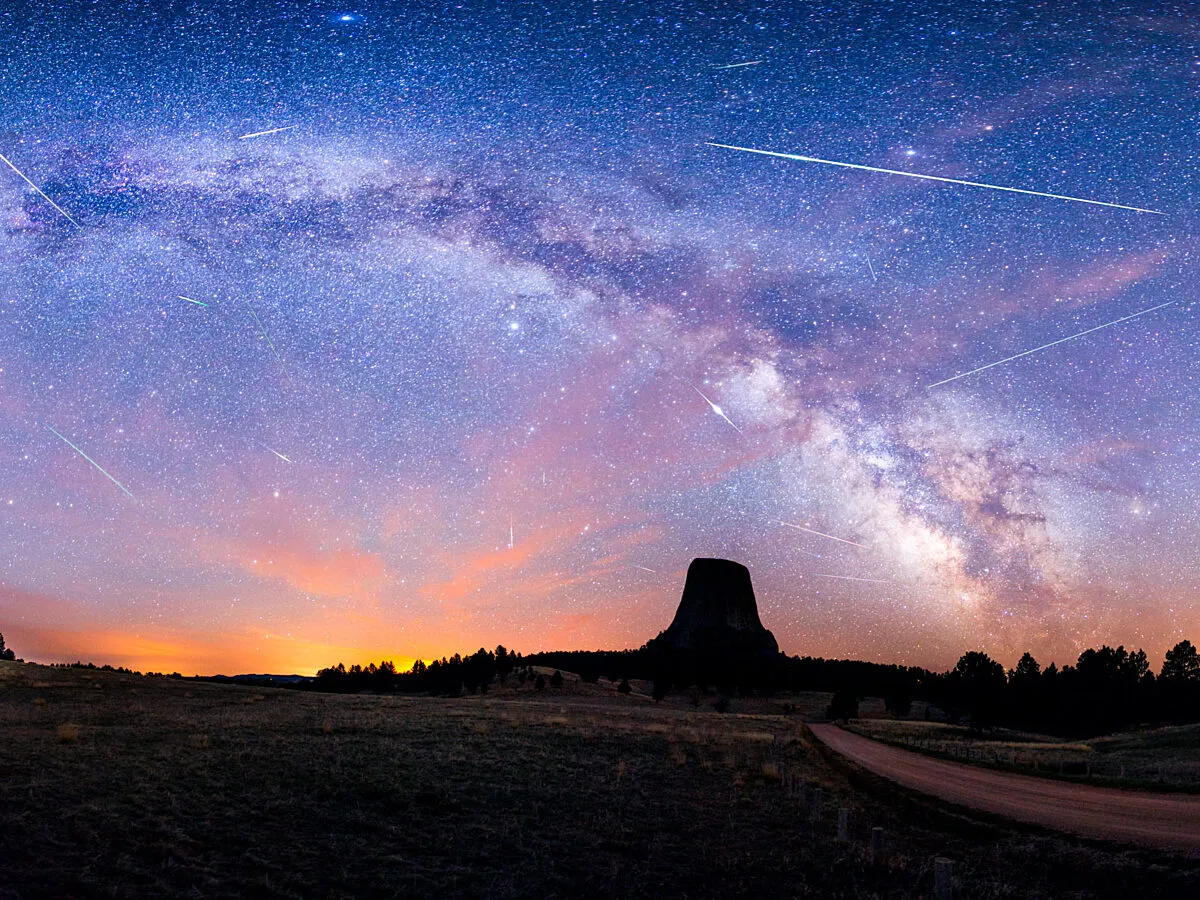
The Eta Aquarid meteor shower, which is expected to peak during the early hours of May 6, 2026, may be significantly dimmed by a bright moon, complicating stargazing efforts in Oregon and elsewhere. Historically, this meteor shower is active from mid-April through late May, providing enthusiasts with the opportunity to witness shooting stars as Earth passes through debris left behind by Halley’s Comet.
Under ideal conditions, observers can expect to see up to 50 meteors per hour; however, in the Northern Hemisphere, this number typically ranges from 10 to 30 meteors per hour. The meteors travel at an impressive speed of approximately 40 miles per second and are particularly noted for their long streaks across the sky rather than for bright fireballs.
Experts suggest that the visibility of the Eta Aquarids could be affected by the moonlight, which may obscure some of the fainter meteors. According to sources familiar with the conditions in Oregon, there is a chance of cloud cover ranging from 66% to 84% along the coast during this period. Consequently, Oregonians hoping for a clear view will need to monitor both the lunar phase and weather forecasts closely.
Key facts about the Eta Aquarids:
- The meteor shower is caused by debris left behind by Halley’s Comet.
- Halley’s Comet takes about 76 years to complete one orbit around the sun.
- The Eta Aquarids will remain active until May 28, 2026.
- The radiant point of the shower is located in the constellation Aquarius.
As Teri Gee notes, “The farther south you are, the better you’ll see it,” indicating that geographical location plays a crucial role in visibility. Furthermore, Nico Adams emphasizes that observers should look for “bright streaks that appear in the corner of your eye for a fraction of a second,” which characterizes this celestial event.
While Oregonians will not require special equipment to view these meteors, they must contend with potential light pollution from the moon as well as atmospheric conditions. Meteor showers like the Eta Aquarids provide an exciting spectacle that occurs at predictable times each year, making them a highlight for astronomy enthusiasts.
Looking ahead, after the Eta Aquarids peak in May, stargazers can anticipate further celestial events such as the Southern Delta Aquarids on July 30–31 and the Perseids on August 12–13 in 2026. These events will offer additional opportunities for observing shooting stars under potentially more favorable conditions.