Introduction
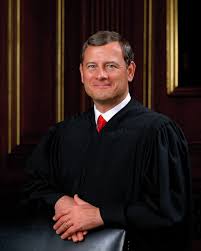
The role of the Chief Justice of the United States is pivotal in shaping the judiciary’s direction. John Roberts, who took office in 2005, has navigated through varied political landscapes and significant cases that have molded the Supreme Court’s current trajectory. His leadership is increasingly relevant as the Court faces heightened scrutiny over its decisions regarding civil rights, healthcare, and election integrity.
Background and Early Career
Born on January 27, 1955, in Buffalo, New York, John Roberts attended Harvard University for both his undergraduate and law degrees. Before his appointment to the Supreme Court, he served as a judge on the U.S. Court of Appeals for the D.C. Circuit, which is often regarded as a stepping stone to the Supreme Court. Roberts was nominated by President George W. Bush and confirmed by the Senate with a vote of 78-22.
Major Cases and Decisions
As Chief Justice, Roberts has presided over several landmark cases. Notably, he played a crucial role in the 2012 decision to uphold the Affordable Care Act (ACA), stating that the individual mandate fell within Congress’s taxing power. This ruling demonstrated his willingness to assert judicial independence and maintain precedent, even when under pressure from conservative factions.
In recent years, Roberts has also been a pivotal voice in cases involving voting rights, where he has advocated for a more cautious approach to changes in voter laws. His vote was decisive in 2021 when the Court declined to hear a case challenging a Pennsylvania mail-in voting law, signaling a reluctant acceptance of expanded voting initiatives during the pandemic.
Current Relevance and Future Outlook
Roberts faces a challenging environment as the Supreme Court grapples with critical issues, including abortion rights following the overturning of Roe v. Wade, gun control, and affirmative action in college admissions. His leadership style, often described as cautious and consensus-driven, is viewed by many as essential for maintaining the integrity of the Court amidst a polarized political climate.
Looking forward, observers speculate that Roberts will continue to seek a balance between the Court’s conservative majority and the evolving social values of the American populace. His ability to navigate these waters will have a lasting impact on the Court’s legitimacy and its role in American society.
Conclusion
Chief Justice John Roberts remains a central figure in a critical period for the Supreme Court. With ongoing cases that could redefine American laws and social norms, his actions and decisions will be closely monitored by legal experts and citizens alike. As the nation watches, Roberts’ commitment to guiding his Court through turbulent times may be more significant now than ever.