Aurora Borealis Watch Issued by NOAA
Before the recent developments, expectations for aurora visibility in the northern U.S. were largely based on historical data, which indicated that March is typically the best month for viewing these natural light displays. This understanding was supported by a 75-year data set studied by retired NASA solar physicist David Hathaway, who noted that October follows closely as the second-best month for aurora activity. However, the current situation has shifted dramatically with the NOAA’s recent announcement.
Decisive Moment: A Strong G3 Geomagnetic Storm
On December 8, 2025, NOAA issued a geomagnetic storm watch, predicting a strong G3 geomagnetic storm that is expected to last through midday December 9. This storm is a direct result of a ‘full-halo’ coronal mass ejection generated by a powerful solar flare on December 6. The immediate implications of this storm are significant, as auroras may be visible from late Monday night into the early hours of Tuesday morning, and potentially again on Tuesday night.
Widespread Visibility Across the Northern U.S.
The predicted visibility of the auroras extends across a wide swath of the northern U.S., including states such as Alaska, Washington, Oregon, Idaho, Montana, Wyoming, North Dakota, South Dakota, Nebraska, Minnesota, Iowa, Wisconsin, Illinois, Michigan, Indiana, Ohio, Pennsylvania, New York, Massachusetts, Vermont, New Hampshire, and Maine. This broad coverage marks a notable change from the typical geographic limitations of aurora sightings, which are often confined to more northern latitudes.
Expert Insights on Viewing Conditions
Caitlin Kaiser from NOAA emphasized that while parts of the Great Lakes, Midwest, and Northeast will have the best chances of seeing the northern lights, other regions may contend with thick cloud cover. She advised potential viewers to bundle up, as temperatures in many areas are expected to drop well below freezing during the nights when the auroras are visible. This highlights the importance of not only the geomagnetic conditions but also the weather conditions in determining visibility.
Understanding the Science Behind Auroras
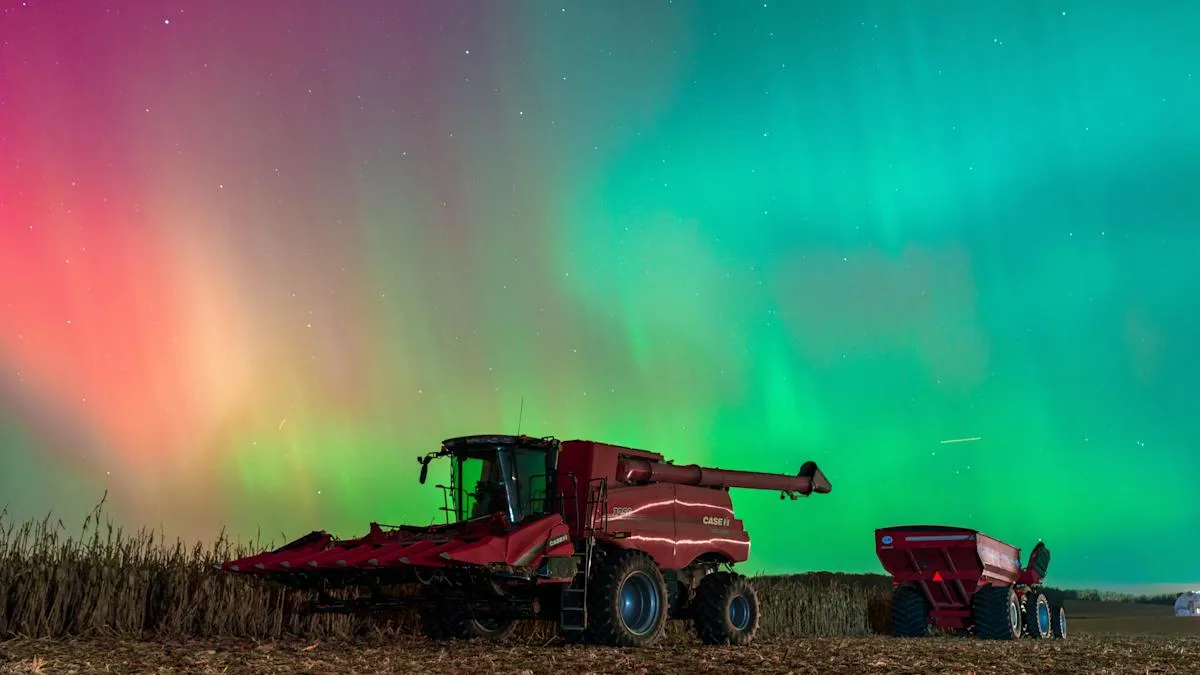
The auroras are caused by fast-moving solar wind impacting the Earth’s magnetic field. This interaction creates the stunning light displays that many people travel to see. The current geomagnetic storm is expected to produce a vibrant display, which could attract both casual observers and dedicated aurora chasers alike. The excitement surrounding this event underscores the ongoing interest in space weather and its effects on Earth.
Looking Ahead: Future Aurora Events
While the current geomagnetic storm presents a unique opportunity for aurora viewing, it is worth noting that NOAA has also issued a geomagnetic storm watch for March 6, 2026, predicting visible auroras farther south than usual. This suggests that the upcoming months may hold additional chances for aurora enthusiasts to witness these natural phenomena, particularly as we approach the next vernal equinox, which is set to occur at 3:46 pm UTC on March 20, 2026.
Conclusion: A Rare Opportunity for Aurora Viewing
The NOAA’s aurora borealis watch signals a rare opportunity for many in the northern U.S. to experience the beauty of the northern lights. As the geomagnetic storm unfolds, observers are encouraged to keep an eye on the skies and prepare for potentially stunning displays of natural light. Details remain unconfirmed regarding the extent of visibility in certain areas, but the excitement surrounding this event is palpable.