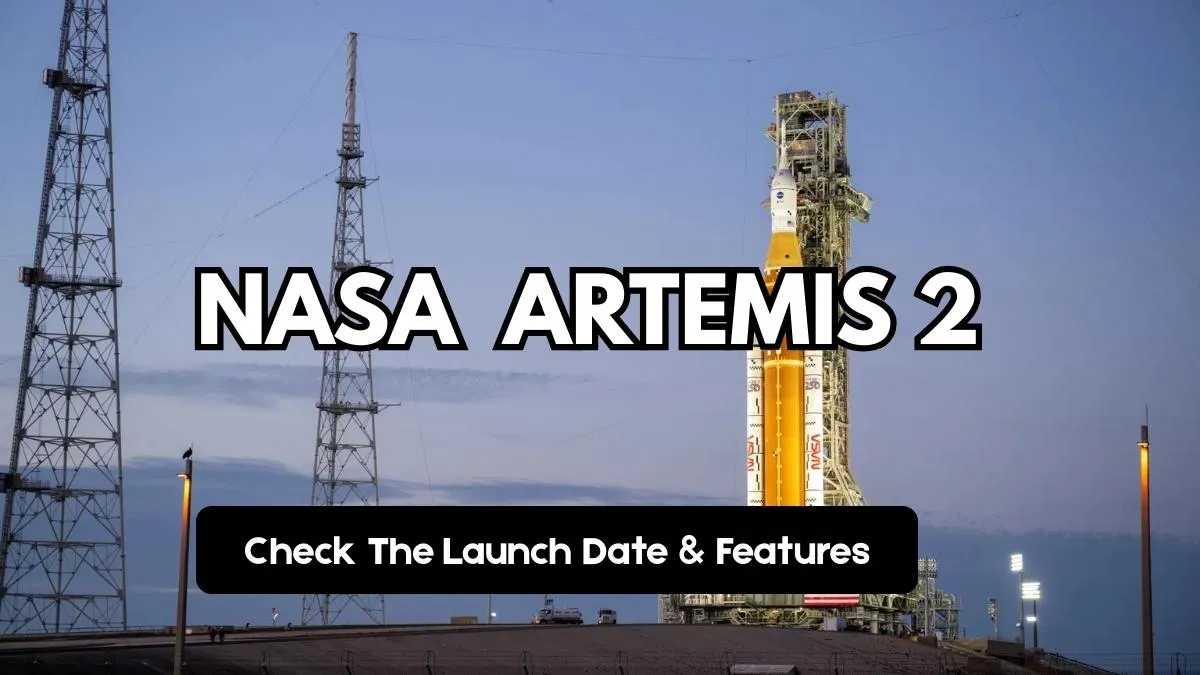
“Looking at some of the timelines and all, when you see on there ‘go for translunar injection,’ those are words that we haven’t heard since 1972,” remarked Don Platt, a key participant in NASA’s Artemis program. This statement encapsulates the excitement surrounding the upcoming Artemis II mission, which is set to launch on April 1, 2026, from the Kennedy Space Center in Florida.
The launch window will open at 6:24 p.m. EDT, marking a pivotal moment in NASA’s efforts to return humans to the moon. The Artemis II mission will send four astronauts on a 10-day journey around the moon, although it will not include a lunar landing. The crew comprises seasoned astronauts: Reid Wiseman, Victor Glover, Christina Hammock Koch, and Jeremy Hansen.
This mission aims to test new hardware and systems in preparation for future lunar landings, a crucial step in establishing a sustained human presence on the moon. The rocket will produce an impressive 8.8 million pounds of thrust at liftoff, propelling the crew into space approximately eight minutes after launch.
Reid Wiseman highlighted the significance of the mission, stating, “We’re going 250,000 miles from planet Earth, and it just so coincidentally happens to be the 250th anniversary of the United States of America.” This journey not only marks a technological achievement but also resonates with the spirit of exploration that has characterized American space endeavors.
Christina Koch emphasized the mission’s inclusive vision: “We seek to go for all and by all, because if we are not doing that, we’re not truly answering humanity’s call to explore.” This reflects NASA’s commitment to diversity and collaboration in space exploration.
As excitement builds, there remains a level of caution. Don Platt acknowledged, “There’s always concern about something that may pop up,” indicating the inherent uncertainties in space missions. Details remain unconfirmed regarding any potential challenges that could arise as the launch date approaches.
The Artemis program represents a significant leap forward in lunar exploration, aiming to not only revisit the moon but to lay the groundwork for future missions to Mars and beyond. The world will be watching as NASA prepares for this historic launch, marking a new chapter in human spaceflight.