Who is involved
The Ambassador Bridge has long been a symbol of trade between Canada and the United States, historically dominating the landscape of cross-border traffic. For decades, it was the primary route for commercial vehicles traveling between Michigan and Ontario, facilitating billions in trade. However, recent developments have dramatically altered this status quo, leading to a significant decline in its traffic volume.
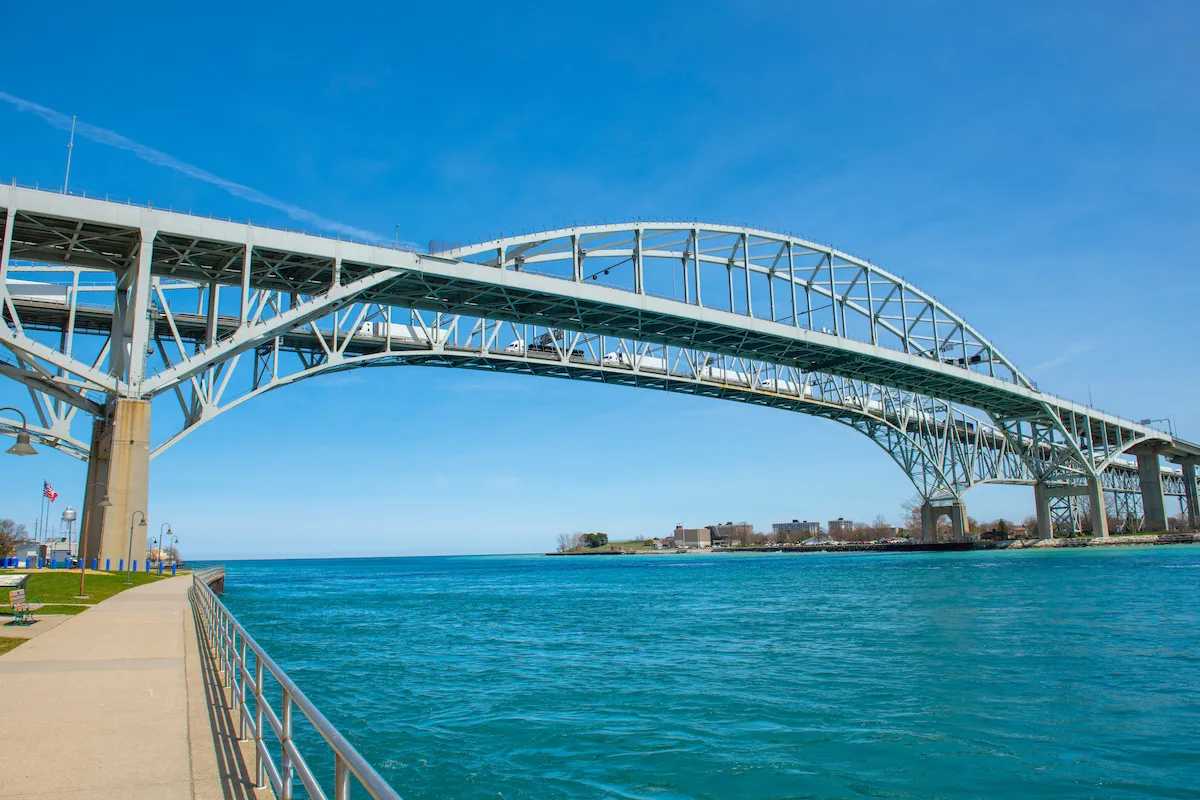
In 2025, the Ambassador Bridge recorded 1.9 million commercial vehicle crossings, a notable figure but insufficient to retain its top position. The decisive moment came when the Blue Water Bridge surpassed it, achieving over 2.1 million commercial vehicle crossings that same year. This shift marks a pivotal change in the dynamics of cross-border transportation, as the Blue Water Bridge has now become the busiest crossing for commercial traffic.
The first quarter of 2026 has further illustrated this trend. The Ambassador Bridge reported 496,796 commercial truck trips, while the Blue Water Bridge saw 531,732 trips during the same period. This emerging pattern indicates a growing preference among truck operators for the Blue Water Bridge, likely influenced by its significantly lower tolls—$7 per axle compared to the Ambassador Bridge’s $27 per axle. High tolls at the Ambassador Bridge have driven record commercial traffic through the Blue Water Bridge, highlighting the price sensitivity that has entered the market for the supply chain.
Experts in the field have weighed in on this shift. Stephen Laskowski of the Canadian Trucking Alliance noted, “Historically over the decades, the Ambassador Bridge was always the leading crossing between Michigan and Ontario by a significant number.” This historical context underscores the magnitude of the current changes. He added, “Price sensitivity entered in the market for the supply chain,” emphasizing how financial considerations are reshaping transportation routes.
Moreover, the Gordie Howe International Bridge, which is intended to further facilitate traffic across the border, has faced delays and is currently about $700 million over its $5.4 billion budget. Its opening date remains uncertain, leaving stakeholders in limbo regarding future traffic patterns. As the Ambassador Bridge grapples with its declining traffic, the uncertainty surrounding the Gordie Howe International Bridge adds another layer of complexity to the situation.
As the landscape of cross-border transportation continues to evolve, the implications for various stakeholders are significant. The Bridge and Tunnel Operators Association, along with trucking associations, will need to adapt to these changes, as the Blue Water Bridge has now surpassed all other international crossings in commercial traffic volume. This shift not only affects the operators of these bridges but also impacts the broader supply chain and trade dynamics between the two nations.
In summary, the Ambassador Bridge’s decline as the leading crossing for commercial traffic between Canada and the U.S. highlights a critical shift in transportation trends. As tolls and operational efficiencies come to the forefront, the landscape of cross-border trade is being reshaped, with the Blue Water Bridge emerging as a formidable competitor. Details remain unconfirmed regarding the future of the Gordie Howe International Bridge, but the current trajectory suggests that the Ambassador Bridge may need to rethink its strategies to regain its former status.