Introduction: The Importance of NFL Divisions
The National Football League (NFL) is one of the most popular professional sports leagues in the United States. Understanding the structure of NFL divisions is crucial for fans and analysts alike, as it not only shapes the schedule but also influences playoff qualifications and team rivalries. The NFL is divided into two conferences, the American Football Conference (AFC) and the National Football Conference (NFC), each containing four divisions. Each division plays a critical role in the competition and has its unique characteristics and historical significance.
Structure of NFL Divisions
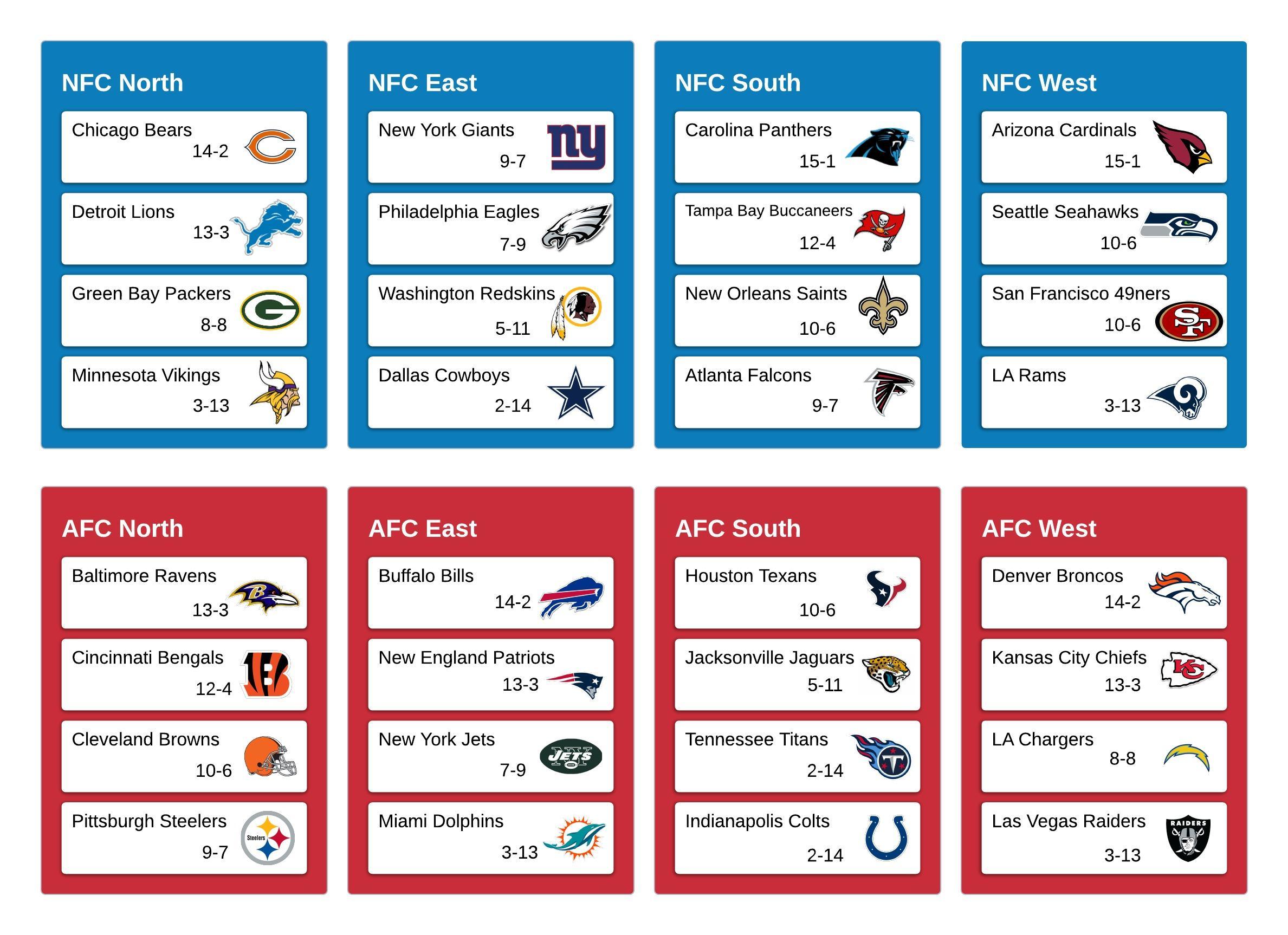
The NFL is divided into a total of eight divisions: four within the AFC and four in the NFC. Each division consists of four teams, competing against one another throughout the regular season. The divisions are as follows:
- AFC East: Buffalo Bills, Miami Dolphins, New England Patriots, New York Jets
- AFC North: Baltimore Ravens, Cincinnati Bengals, Cleveland Browns, Pittsburgh Steelers
- AFC South: Houston Texans, Indianapolis Colts, Jacksonville Jaguars, Tennessee Titans
- AFC West: Denver Broncos, Kansas City Chiefs, Las Vegas Raiders, Los Angeles Chargers
- NFC East: Dallas Cowboys, New York Giants, Philadelphia Eagles, Washington Commanders
- NFC North: Chicago Bears, Detroit Lions, Green Bay Packers, Minnesota Vikings
- NFC South: Atlanta Falcons, Carolina Panthers, New Orleans Saints, Tampa Bay Buccaneers
- NFC West: Arizona Cardinals, Los Angeles Rams, San Francisco 49ers, Seattle Seahawks
Significance and Impact
The division structure is significant as it impacts how teams qualify for the playoffs. Each year, the four division champions from both the AFC and NFC secure a spot in the postseason, along with three Wild Card teams from each conference. This format influences each team’s strategy throughout the regular season, as winning the division is often regarded as a top priority.
Additionally, rivalries are deeply embedded within these divisions, with matchups often sparking intense competition and fan engagement. Games between division opponents usually draw heightened interest due to the implications they carry for playoff positioning.
Conclusion: Looking Ahead
As the NFL continues to evolve, the division structure remains a pillar of the league’s organization. Insights into the dynamics of NFL divisions can enhance the viewing experience for fans and help analysts predict outcomes and team performances. With an expanding fanbase and increasing competition, the significance of NFL divisions is set to grow in the coming years. Understanding this structure not only enriches the viewing experience but fosters greater appreciation for the sport and its rich history within American culture.